
On Balinda, Brotherhood, and What Greatness Actually Costs
There’s a screen I keep seeing when I close my eyes.
It’s the sterile white background of a GoFundMe page. A progress bar that barely reaches the quarter mark. A target number printed in clean, matter-of-fact typography: five thousand dollars. And beside it, the actual tally.
Thirteen hundred.
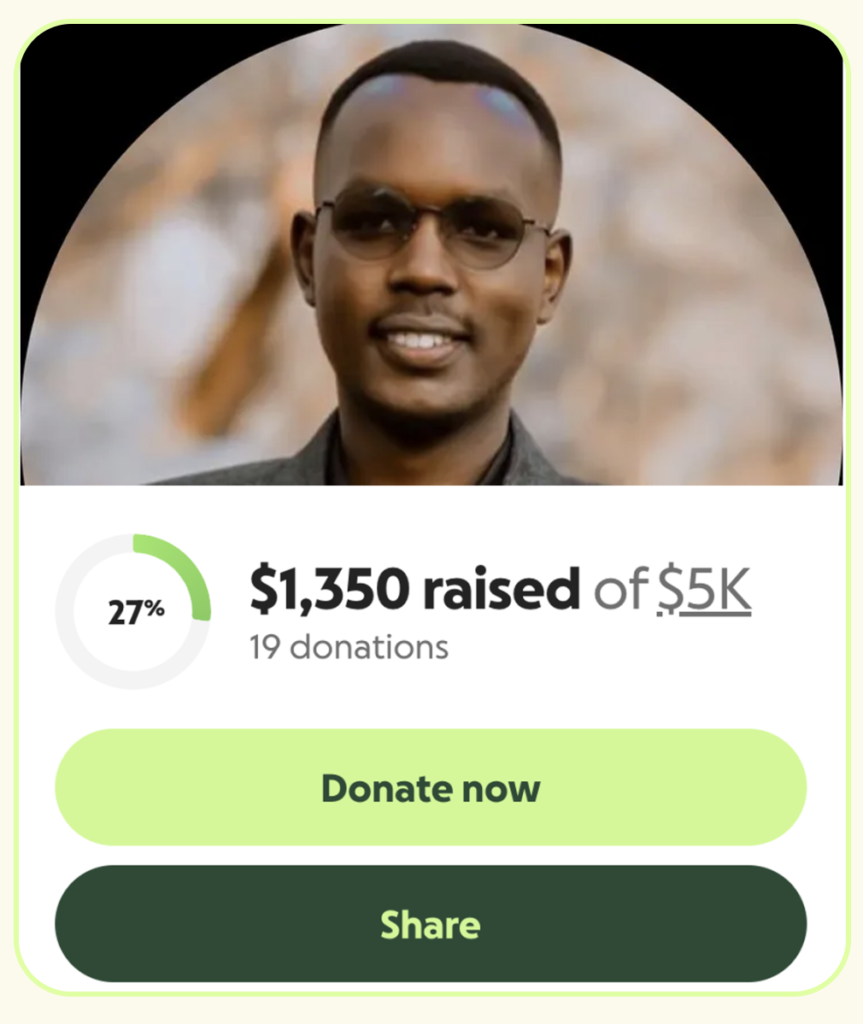
Beneath that number is a donor ledger so short you don’t need to scroll. A handful of family members. A few acquaintances. And sprinkled into that meager record, a couple of names from our circle. Mine is there. I put in a hundred dollars.
I don’t say that to pat myself on the back. I’m not purchasing an indulgence or establishing a standard. If anything, that figure burns, because that hundred dollars came out of an account that had no business parting with it.
As I write these words, it is the 21st of the month. My MDI account is suspended because I cannot pay my dues. I don’t know where my rent is coming from in nine days. So, I’m not speaking to this community from a position of abundance. I know what it feels like to lie awake at three in the morning running numbers that don’t add up. I know financial terror at a cellular level.

Photo by J.P. Valery.
And I gave a hundred dollars anyway, because a man I sit with in circle was arrested. He was stripped of his freedom, processed, and handed over to the machinery of the American penal state. His family, scrambling and terrified and humiliated in the way that families of arrested men always are, did what people in crisis do when they run out of options: they passed the digital hat. They asked for five thousand dollars so their son, their father, our brother, might have an attorney standing between him and a system that was not built to give him the benefit of the doubt.
Five thousand dollars. That’s the ransom. And then I let the mathematics tear into me.
There are 130 men on the roster of Atlas, our MDI division. One hundred and thirty grown men who show up to meetings, who claim membership in the same house, who look one another in the eye and invoke the language of sacred brotherhood. If every single man in Atlas had opened his phone, skipped two coffees, and put ten dollars into that fund, we would have doubled it in an hour. Thirteen hundred more dollars, straight onto the ledger, the needle jumping past the halfway point before lunchtime.
Across the wider organization there are five hundred men wearing the cloth of MDI. If each had contributed ten dollars — dollars that no man reading this would even notice leaving his bank account — the goal would have been gone before nightfall. Five thousand dollars. Paid in full. A brother with a legal defense, knowing that behind him stood a phalanx of five hundred men who refused to let him drown.
Photo by StudioEIS
Instead, the needle stopped moving at thirteen hundred. The screen went cold. And the remaining thirty-seven hundred dollars became a monument to silence. I stared at that number for a long time. I’m still staring at it.
I want to be clear about where I’m standing when I write this, because it matters.
I’ve been an MDI man for three years. In an organization thick with decades of folklore, veterans who speak in the shorthand of decades past, men whose identities are stitched permanently into the fabric of the community, I am still green. I know it. There are entire layers of institutional culture I haven’t accessed yet. There are conversations happening in rooms I haven’t been invited into. I carry that humility into everything I’m about to say.
I haven’t attended the weekends: not Sterling; not TOAM; not Legacy Discovery. And I want to tell you exactly what it’s been like not to have attended them, because the experience of being an MDI man who hasn’t done the weekends is an experience worth naming.
You cannot exist in this organization for more than six months without feeling the pressure to go. It’s not invitational pressure. It’s not the warm, generous offering of a man who has found something transformative and wants to share it: it is levered pressure, it has an edge. It sounds like a knowing smile during a debrief, a patronizing tilt of the head, a sentence delivered with just enough gentleness to make the condescension deniable:
“Well, Lucas, if you’d attended a men’s weekend, you’d understand the technology we use for that. You’d know how to hold this space.”
Fuck off.
I mean that seriously and I want it on the record. I’m not intending to dismiss the value of those weekends. I believe they hold real technology. I believe men come out of them changed. I believe there is wisdom in those containers that I don’t have yet.
But here is the question that sentence forces on me every time I hear it — and I’ve heard variations of it more times than I can count: are we an organization whose purpose is to lift men to Greatness? Or are we an elaborate, multi-tiered recruiting funnel for a proprietary weekend program, and Greatness is just the language we use to make enrollment feel sacred?
Are we an organization whose purpose is to lift men to Greatness? Or are we an elaborate, multi-tiered recruiting funnel for a proprietary weekend program, and Greatness is just the language we use to make enrollment feel sacred?
Because those are not the same thing. And I think we need to know which one we are before we can have any honest conversation about what we’re doing here.
A few months ago I sat down and wrote two essays for this community. One examined whether masculinity is genuinely under attack [Is Masculinity Under Attack? Yes, And We Did It To Ourselves. Legacy Magazine, May 2026] The other wrestled with the nature of Honor. [What Is Greatness? Legacy Magazine, March 2026] I didn’t write them as commandments from a mountain. I wrote them as responses, as attempts to put language around something I kept feeling that didn’t have words yet. An ache. A sense that something ancient and essential was slipping through our fingers while we talked about it in circles.
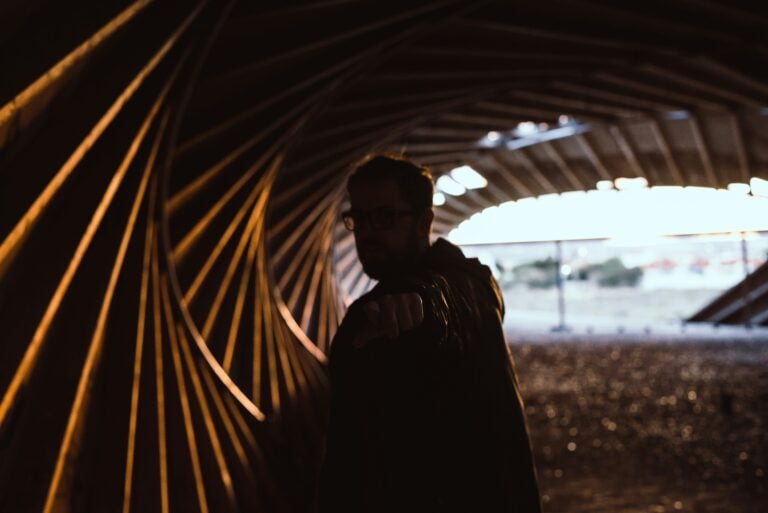
Photo by Frames for your Heart.
And now, staring at Balinda’s GoFundMe frozen at thirteen hundred dollars, a third question has forced its way through everything else: what is Greatness?
What does it actually mean? What does it cost? And are we even trying to find out? I didn’t sit quietly with this.
I want you to know that because part of the story I’m telling is about a man who did the right thing for a while — his version of the right thing — and then stopped, and I need to be honest about both halves of that.
I stood up in front of sixty men at an Atlas Division Meeting. Sixty men. I stood there looking at people I genuinely respect, men who’ve built companies and survived cancer and raised children and done hard things. And I laid the mathematics out on the floor in front of them. Not as a speech and not as a performance. Just as numbers. One hundred and thirty men. Five thousand dollars. Ten dollars each. Here’s the math. Here’s our brother. Here’s the gap between what we say we are and what the GoFundMe page says we are.
I asked that an appeal be printed in Legacy Magazine and, to Legacy Magazine’s credit, it was.
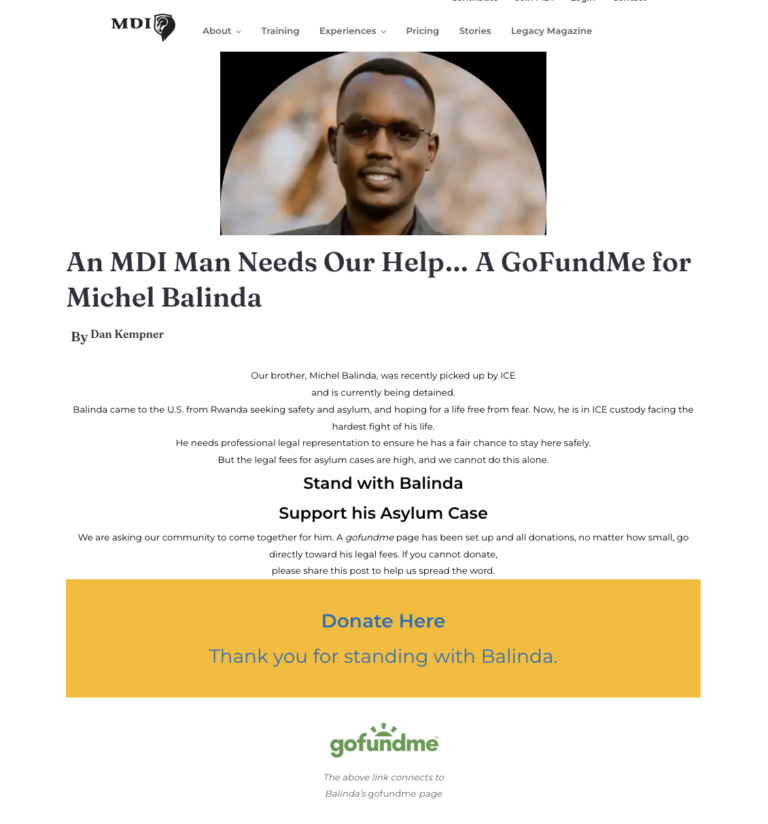
An MDI Man Needs Our Help.
Legacy Magazine, posted March and April, 2026.
I went to leadership. I pressed. I pushed. I used every piece of leverage I thought I had, which turned out not to be much. I demanded to know how we could sit in our circles week after week invoking our codes and practicing our masculine protocols, while a man who sat among us was locked in a cage because our collective pockets couldn’t be bothered to produce ten dollars a man.
And do you know what happened? I was told “Root, your context sucks.” And the room absorbed it. All of it. That specific sound, of a room that has received something and set it aside, is one of the lonelier sounds I now have the dubious pleasure to know.
Photo by Anastasia Vikhareva.
So, I gave up.
I shut my mouth. I pulled back from the meetings. I disengaged in the particular way that men disengage when they’ve exhausted their available tools and don’t want to become the man who keeps screaming into the same void. You know that man. I know that man. I told myself I’d misread the sign on the front door. “Greatness.” That maybe I’d arrived expecting one thing and found another, and the mature response was to recalibrate my expectations rather than keep banging my head against an institutional wall.

Photo by Parrish Freeman.
I still don’t know if that was wisdom or cowardice. Probably some of both.
Last week a brother called me. He’s a good man. He asked me directly, without preamble, why I’d pulled away. I didn’t give him a scheduling excuse. I didn’t talk about bandwidth or competing priorities. I just said the name: “Balinda.”
There was a pause, the kind that tells you the other person heard exactly what you meant. He told me he remembered seeing my donation on the page. He told me he understood why it had gotten under my skin the way it had. He sat with it for a moment, and then he gave me the organizational counter-argument, the one that’s been floating around in the background of this whole conversation.
“Lucas, the biggest operational issue we face as an organization is simply getting men to pay their dues. The money isn’t there. Men struggle. They fall behind. The system is perpetually under-resourced.”
I sat with that. I genuinely did, because it sounds like an unassailable truth. It sounds like the reasonable, experienced explanation of a man who has watched this organization from the inside for longer than I’ve been a member.
And I understand money problems. I understand them right now, today, in a way that is not abstract. I cannot pay my own dues. I don’t know where my rent is coming from. I am not speaking from the penthouse. I know what the floor feels like.
But something rose up in my chest while he was talking, an objection I didn’t know I was carrying until it arrived fully formed, and it came out of me before I’d thought it through: “Atlas has an investment club.”
He paused again. I kept going, because the thread had started unspooling and I needed to follow it.

Photo by Welldone Izere.
“MDI has five hundred men. The elders are actively searching for external charities to support. When you, yourself, moved recently, men showed up with trucks. Men gave their Saturday. Men wrecked their backs hauling boxes and suitcases and trunks. So here’s what I need you to help me understand. Why is one brother’s refrigerator or moving boxes more important than another brother’s legal defense? Why are external charities more deserving of our organized effort and cash than the man sitting in a cell with his family passing a hat? And how do we call ourselves an organization striving for Greatness if we’re completely unaccountable to the smallest possible unit of that pursuit: one man, five thousand dollars, ten dollars each?”
We stayed in that question together for a while. And then I went further, because once the thread is loose you follow it wherever it goes.
“Out of five hundred MDI men,” I continued, “how many are building something right now? How many are trying to create an economic engine that feeds their families, employs their neighbors, builds something that will outlast them? I’ve been raising capital for my own company for eight months. Real capital, real effort, real meetings.
“Is my time, or any builder’s time in our ranks, best spent begging institutional capital that has no particular reason to care whether I succeed? Or is it best spent building, knowing that behind me stands a community of five hundred men who are invested in my success because they chose to be? “In a community of five hundred capable men, there are easily one to three startups being born every year. Wouldn’t Greatness be funding those?
Not as charity: as community. As the recognition that an MDI man’s startup has a fundamentally higher chance of success when five hundred MDI men are watching it, believing in it, sending it business, challenging its thinking, and holding its founder accountable when his head gets foggy?”
The sentence came out of me without warning. I didn’t plan it and I haven’t found a better version of it since: Communities who choose to rise together, do.
We kept talking. And he did what good men do, which is he pushed back. He poked holes. He showed me the structural realities of running a volunteer organization, the inertia, the competing demands, the sheer difficulty of getting grown men to agree on anything, let alone move in the same direction at the same time.
And somewhere in the middle of that, the mirror turned around. Because here is the thing about having a strong idealistic position: eventually you have to reckon with the man holding it. Was I applying my own values to other men who hadn’t asked me to? Was I taking my particular hunger for sovereign, accountable, economically active brotherhood, and using it as a measuring stick against hundreds of men who had simply signed up for a Sunday morning check-in and an occasional weekend?
Two Buddhas. Adapted from a photo
byK.C. Shum using Gemini_AI.
Was my dissatisfaction coming from some place of genuine wisdom? Or was it the hot, self-righteous tantrum of an ego that had decided it knew what Greatness looks like and was furious that nobody was following the blueprint?
The honest answer, the one I sat with for a long time before I could say it out loud, is that it might be both. That the wisdom and the ego might be so thoroughly tangled together that I can’t fully separate them. And that’s an uncomfortable place to write from. So I said it:
“If we just want to be an emotional support group, if our ceiling is being the masculine equivalent of AA, where men gather to process the week’s weight, to survive another seven days, to hold each other up in the dark, then my dissatisfaction is completely unwarranted. I’ll swallow my own bullshit. Because it’s mine. I have no right to demand that an emotional sanctuary suddenly become an engine of conquest. If that’s what we are, I misread the front door, and that’s on me.”
And I mean that. I genuinely mean it.
Emotional triage is not Greatness. It’s the condition that makes Greatness possible. It’s the bandage that keeps you from bleeding out so that one day, maybe, you can stand back up.
Emotional support is not a small thing. A man whose mind is fractured, whose marriage is burning, who is drowning in grief or shame or financial terror, that man cannot pursue anything higher. He can barely get out of bed. Some portion of what any real men’s organization does must always be the triage room, the space where a man can drop his armor and weep without being told to man up. That work is sacred. That work saves lives. I’ve seen it.
But…

Photo by K.Mitch Hodge.
If we’re going to use the word Greatness, if that word is going to be spoken in our circles and printed in our literature and used to justify the existence of this organization, then we need to be honest about what it means. And what it costs.
Emotional triage is not Greatness. It’s the condition that makes Greatness possible. It’s the bandage that keeps you from bleeding out so that one day, maybe, you can stand back up.
Funding Balinda’s GoFundMe is not Greatness.

Photo by Annie Spratt.
I don’t want the argument of this essay to be misread as one man’s call for a charity drive. Balinda’s GoFundMe is table stakes. It is the absolute minimum. It is the thing we do before we even earn the right to ask the Greatness question. It is the ante that lets us sit at the table without choking on the hypocrisy of our own vocabulary.
If we cannot look at thirty-seven hundred dollars standing between a brother and his legal defense, in a community of five hundred men, and find it within ourselves to cover that gap with ten dollars each, then the Greatness conversation is theoretical. It is a story we tell ourselves in rooms that smell like coffee and good intentions while one of our men sits in a cage.

Photo by Philip Brocklehurst.
Ten dollars, that’s the test. Not of our resources: of our character.
You are entirely free to tell me to fuck off. You can tell me I expect too much, that the world doesn’t work this way, that men are overwhelmed and broke and busy and that goodwill has its limits. I understand all of that. I’m living some of it right now.
If we cannot look at thirty-seven hundred dollars standing between a brother and his legal defense, in a community of five hundred men, and find it within ourselves to cover that gap with ten dollars each, then the Greatness conversation is theoretical. It is a story we tell ourselves in rooms that smell like coffee and good intentions while one of our men sits in a cage.
But if you tell me we are in pursuit of Greatness, while five hundred men collectively shrug at thirty-seven hundred dollars sitting between a brother and his defense, then you are lying to yourself. And I think, somewhere underneath the reasonable explanations and the organizational realities, you know it.
I keep coming back to Hercules. Not the one from the comic books or the poster on the gym wall with the oiled muscles and a club. The real one. The one the story was always actually about before Dominator Culture got its hands on it and squeezed out everything that mattered.
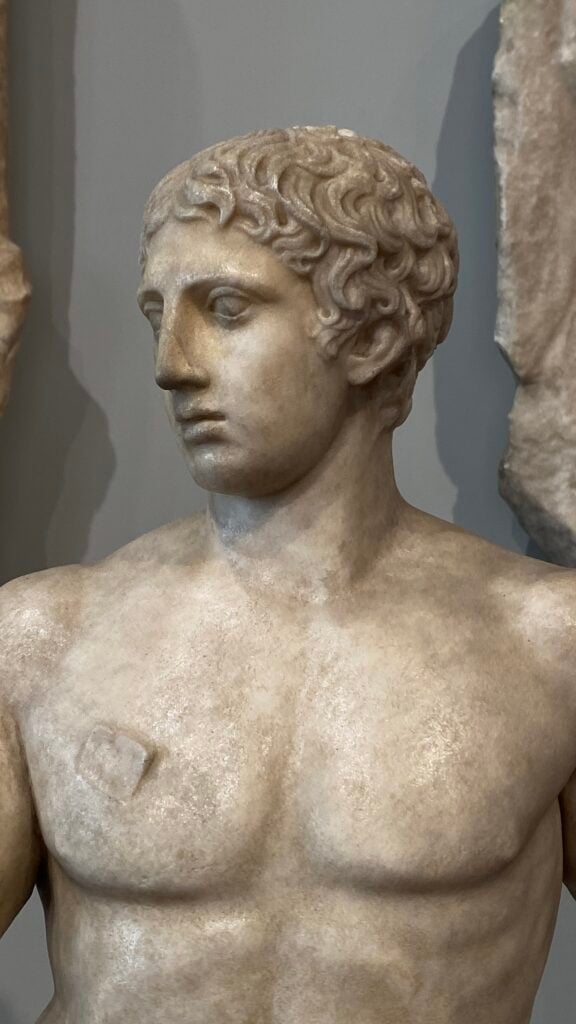
“Detail of Hecules.” Roman marble copy of an original bronze
work by the Greek sculptor Polykleitos (circa 435 B.C.).
Hercules was given strength. He didn’t earn it, t was bestowed on him at birth, a divine endowment, an accident of parentage. His strength was not his Greatness. His strength was just a tool — an extraordinarily powerful tool, yes. But a tool.
Here’s what I want you to sit with: a man who has been given strength and uses it only for himself is not great. He’s just strong. Strength in the service of the self is just a more efficient way of being selfish. We don’t remember those men. We don’t tell stories about them. They leave no mark.
The Greatness of Hercules was forged in his quests, and then in the Trials. In the decision, made over and over again well before — but then again across twelve labors — to take that divine leverage and put it in service of the mortal world. To clean up the messes that no one else could clean. To slay the beasts terrorizing the common village. To descend into the underworld and drag something dark into the light. He did this not because he was compelled by cosmic law but because he chose to. Because he understood something men who are merely strong never figure out: the point of the strength is the people around you..
Now, were there cowards on the sidelines? Always. There were always men who watched from behind the city walls and constructed their careful, self-absolving arguments: of course Hercules can slay the Hydra, he has the blood of Zeus. I don’t have that. I’m just a man. I’m excused from the field.
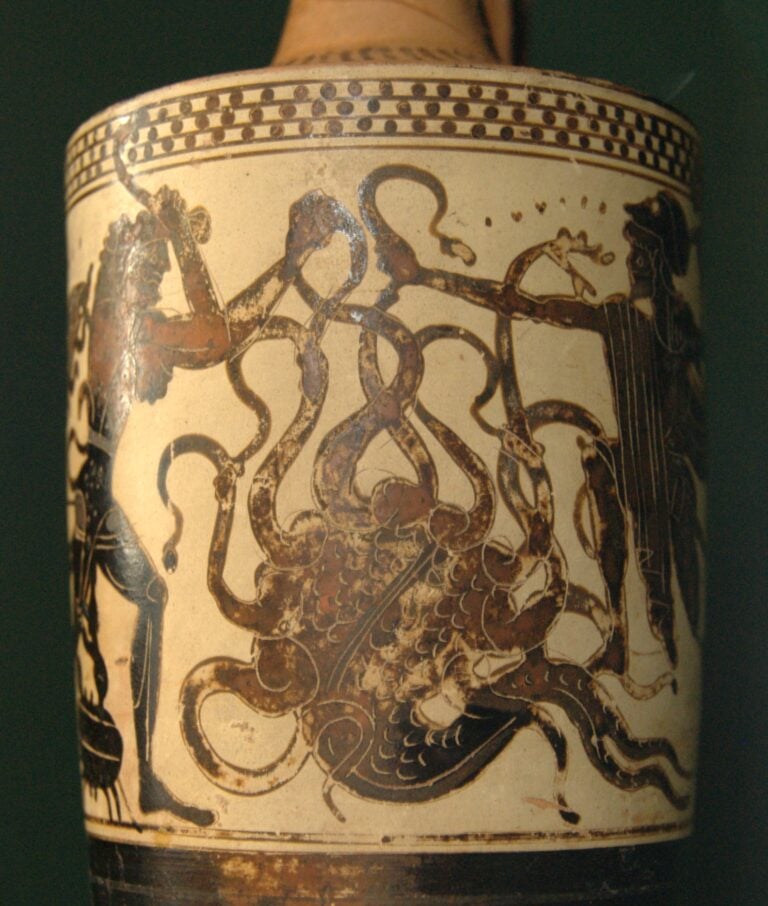
Clay and slip pot depicting Heracles, Lolaus and the Lenaean Hydra.
Potter: Diosphos Painter (Pseudonym) (500-475 B.C.)
Those men were forgotten by history. Not because history is cruel, but because they didn’t do anything worth remembering. The men who mattered were the ones who felt the fire catch in their own chests when they watched a brother put his body between the world and the monster. The ones who looked at each other across the battlefield and said:
“He’s going. I’m going too. Let’s move!”
That’s the moment. That’s the thing we’re either creating or we’re not.
Greatness is not what you possess. You don’t possess Greatness, you perform it, in the original non-theatrical sense: you carry it out, you enact it, you bring it into being through deliberate, costly action. Greatness is the decision to convert whatever leverage you have, your money, your network, your time, your executive experience, your emotional sobriety, your truck on a Saturday morning, into something that pulls the men around you up out of the mud. And, most of all, pulls those men forward.
MDI / Atlas Region Logo.
The Atlas investment club is leverage. Five hundred men is leverage. Showing up for a move is leverage. Knowing a man is sitting in a cell with a GoFundMe that stopped at thirteen hundred dollars is leverage. The question is never whether you have leverage. The question is what you’re willing to do with it.
What I want you to feel…
I didn’t write this essay to be filed away as philosophical commentary. I didn’t write it to display my vocabulary or to perform my dissatisfaction for an audience. I wrote it because I want something to happen, and what I want is specific.
To the man who saw Balinda’s GoFundMe link come through his phone, glanced at it, felt the mild discomfort of a man who doesn’t want to deal with something uncomfortable, and closed the tab because it wasn’t his problem: I want you to be embarrassed.
Not destroyed. Not condemned. Not marked as a bad man, because I don’t believe you are a bad man. I believe you are a busy man who made a choice he didn’t fully reckon with. But I want you to sit in the specific, honest embarrassment of knowing you walked past your brother on the Jericho road. That you had ten dollars. That you knew. That you chose not to. That feeling exists for a reason. It is information. It is pointing at something.
Brotherhood that costs you nothing, that demands no material risk and rescues no one from a concrete, measurable crisis, is not sacred tradition: it is theater.
To the elders and the leaders who stand in our circles week after week invoking the sacred language of brotherhood… who demand respect for decades of tradition, who have the institutional weight of this organization behind them and who did not use that weight to move the needle on a five-thousand-dollar legal defense fund: I want you to feel ashamed.
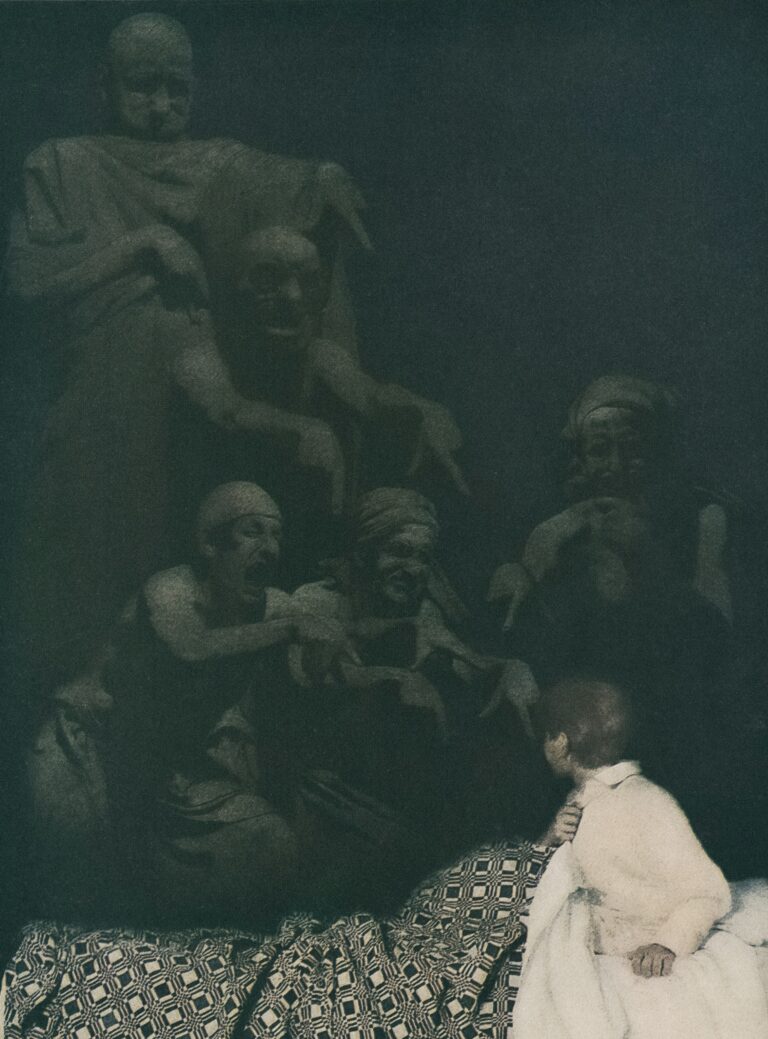
Seein’ Things. Maxfield Parrish, oil on wood (1904).
Not permanently, and not as a verdict on your worth as a man. But as an honest reckoning with the distance between what you preach and what you practice. Brotherhood that costs you nothing, that demands no material risk and rescues no one from a concrete, measurable crisis, is not sacred tradition: It is theater. Beautifully staged, sincerely felt, yet ultimately hollow theater. The shame is not punishment. It’s an invitation to close the gap.
And to the men who sit in our circles, week after week, with a restlessness they can’t quite name, a boredom that sits underneath the genuine connection and the real work; who hunger for something worthy of their full capability, their intellect, their grit, and their capacity for sacrifice: I want you to be inspired.
Not inspired by me, but by the possibility of what we could actually be. If…
Embarrassment and shame are not the destination: they’re the door. You walk through embarrassment and you find accountability. You walk through shame and you reclaim your own standards. And on the other side of that door is the only question that can redeem an organization: What kind of brotherhood are we actually building?
Here’s what I know: a man can’t pursue Greatness when his head is all fucked. That’s true. Some of what this organization does will always need to be the triage room, and it should be. That’s not a concession. That’s a foundation. Yet, a foundation is not a destination.
Hercules didn’t use his strength to feel better about being Hercules. He used it to make the world around him harder to look away from. He made men look at what was possible and feel the fire catch. He made them want to go.

Photo by Karsten Winegeart.
That’s what I want for us. Not a community of men who feel good about being together but of men who are actually going somewhere together. Who fund the GoFundMe before they finish arguing about whether they can afford it. Who invest in each other’s startups because they know the investment pays more than money. Who show up with trucks and with ten dollars and with their full institutional weight when a brother is in a cell, not because the manual says to, but because he is in a cell and we said we were something.
Balinda’s GoFundMe is not Greatness: it’s the proof of concept. It’s the moment where we find out if the thing we say we are is the thing we actually are.
We either pass it or we don’t.
And if we do, if we look at that number and move it, then we’ve earned the right to ask the next question. And the one after that. And we keep asking, and we keep going, and we keep putting our leverage in service of the men around us, man by man, dollar by dollar, trial by trial, until Greatness isn’t a word we invoke in circles.
And if we do, if we look at that number and move it, then we’ve earned the right to ask the next question. And the one after that. And we keep asking, and we keep going, and we keep putting our leverage in service of the men around us, man by man, dollar by dollar, trial by trial, until Greatness isn’t a word we invoke in circles. Until it’s a thing we actually are.
To a man, we must. For a man, for each man, we must.
Or not. And then we get what we’ve been getting.

Dr. Lucas Root is a Ph.D. strategist, builder, and operator known for architecting Pokémon’s half-billion-dollar vending network. Today, he works with founders, investors, and leaders to scale AI-driven systems, communities, and ventures with precision and depth.