
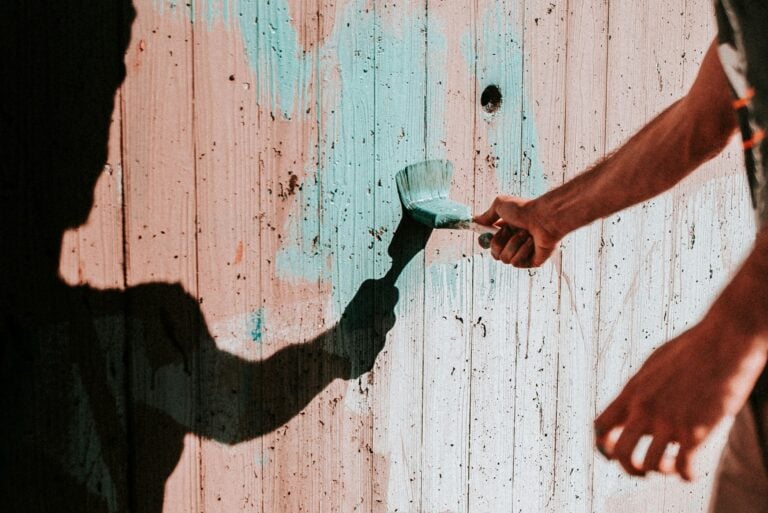

The movie The Town (2010) contains the following bit of dialog:
Doug (Ben Afflek):
“I need your help. I can’t you tell what it is, you can never ask me about it later, and we’re gonna hurt some people.”
Jem (Jeremy Renner):
“Whose car are we gonna take?
This exchange is often touted as a premier example of true friendship.
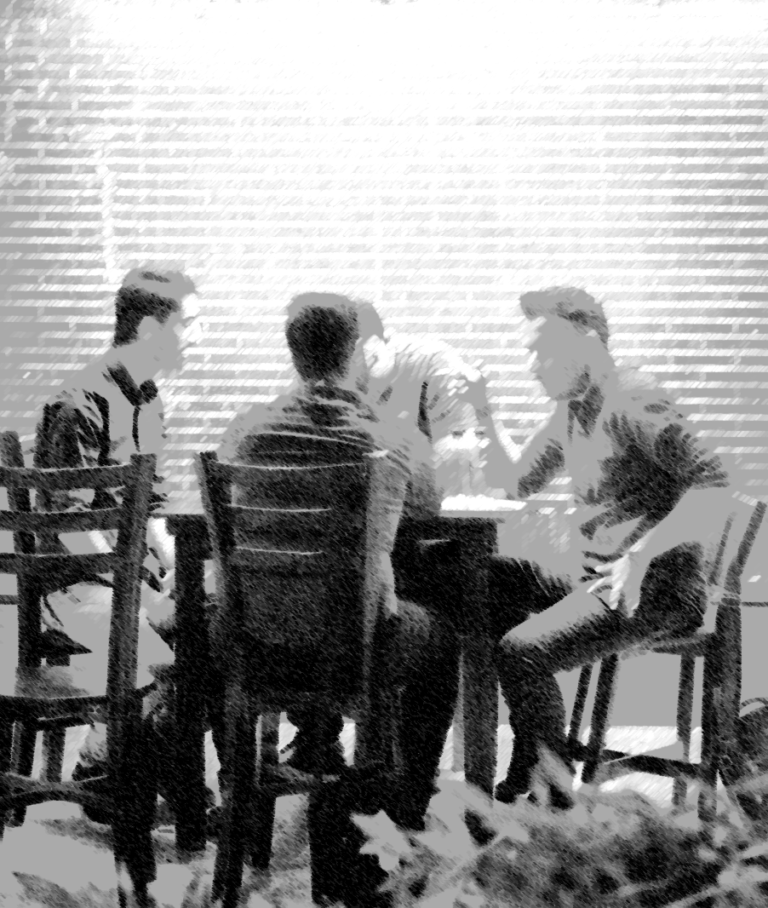
Four men at a Café in Ahvaz, Iran. Silvered adaptation
of an original photo by Ashkan Forouzani.
When I received Legacy Magazine’s request to write about friendship, I immediately thought about this kind of ride-or-die friendship. Luckily, I have no friends who would help me beat someone up. But what kind of friends do I have? What kind of friend am I? Where did my friends come from? Who calls me a friend? All good questions.
I’m coming up on my 20th anniversary of joining Facebook and in that time I’ve collected 581 Facebook friends. When I break those down, how many are, truly, friends?

Image by Zulfugar Karimov.
Many are relatives, and a group of neighbours; a handful I’ve met while travelling, or as part of a club or hobby. A few are ex-coworkers, friends of friends, and some are just folks I’ve stumbled upon, have never met, and probably never will.
The word “friend” has too many applications. If I can understand the various types of friendships and how we interact with them, that will probably help answer the questions above.
Type 1: Functional and Situational Friends
This includes work and school friends — people you saw every day for a long stretch of time, shared some background experiences with, and ate countless lunches with. These are your first round of networking contacts, your LinkedIn connections. You share war stories and look to the future with them.

Image by Annie Williams
It also encompasses occasional friends – those whom you may see a few times a year. You might share a hobby, a club, or sport with them. Good times, but the time between visits becomes longer and longer.
Type 2: the Inner Circle
This cadre includes lifelong friends — those who were key to your coming of age. You grew up with them, shared countless experiences with them, exchanged milestones like your first love, graduations, weddings, childbirths, first job, and more. These friends generally care about you and want what is best for you — though they might be a bit judgmental and may not be the easiest to be around at times.

Two men walk the beach at Nida, Lithuania.
Photo by Ricardas Brogys.
Close friends are just a notch below these. They are men you’ve collected along the way. It could be from school, church, work, sports… These are rare. Finding someone with whom you can share your personal struggles, your vulnerabilities. They have great insights, and you are able to drop your guard around them.
Type 3: Other Types of Friends
The list of friend varieties can go on, too: neighbours. Dad friends. Business contacts. We often collect friends with varying degrees of intensity.
So… what kind of friend am I?
I’m probably the “fix-it, project” friend, the friend people reach out to when they want to borrow a power tool, need a pot of chilli for the meeting, a ride to pick up their car, or to install an appliance for them.
Is that enough? Is this the kind of person people want to get close to?
I reached out to people when my relationship was ending, when no clients were returning my calls, when my dad was dying, when my teenage son was driving me crazy. I’ve done the quid… where’s the pro quo?
Our need for friends is always changing, especially in the late twenty-twenties. We find ourselves at home more, we trust AI to help us make the biggest decisions, and the space between us and our friends is growing larger.
I do my best to keep up and let people know I’m here. I follow up when I hear about illness, injuries, or other struggles. Sometimes just to say ‘hi.’ I always send messages on birthday and other milestones. I try to make plans with people and invite them to my home. And with all this, a bigger question comes up: what kind of friend do I want to be?
On reflection, I’d like to be:
• Exceptional listener – someone who lets a friend express themselves fully
• Truth teller — a friend who is willing to cut through the backstory and let them know the truth as I see it
• Accountability partner — if, and only if, that’s what the friend is looking for
• Partner in crime — I’m always ready to help
• Adventure buddy — Ready for any kind of activity: rock climbing, concerts, travel, watching sports, you name it

Photo by Annie Williams.
Do you want more friends? Do you want better friends? If not, stop reading. But, if you do, keep going. What kind of friends do you want to have? Can we migrate the work and occasional friends to our inner circle? How are we going to cultivate relevant friendships in 2026? Here are some tips:
• Join a men’s group! Right, you already got that covered
• Become a better listener – stop telling your story, stop interrupting, learn how to ask probing questions
• Follow Vanessa Van Edwards. She has numerous books, videos, articles, and social posts on how to be a better connector, friend, and business colleague
• Level up your friends on the periphery. Set up regular meetups, be open and vulnerable with the men you already know. Get used to rejection. Chances are these outlying friends may not be looking for the same friendship you are. Be ready to move on and give them what they want — if it works for you
• Engage in repetitive, preferably new, activities — where you see the same people week after week: sports teams, volunteer activities, places of worship, etc
• Do things differently. Change your route to work. If you buy your coffee, pack a thermos. Update your wardrobe, declutter your space. Small shifts in your behaviour will absolutely introduce new people into your life and change the way the people in your life see you
Do you want a new friend? Feel free to send me a Facebook friend request.
About the Author:

Matthew “Biz” Biswas has been a member of Midnight Sons since 2018. He is a business owner, a father, a semi-skilled athlete, a rock-music aficionado, and a closet prepper. He lives in Toronto and can be reached at matthew@biswas.ca or on facebook and Instagram @matthewbiswas .
A Word on the Frontispiece and Background and Frontispiec

Photo by Daniel Chekalov.
Image created using Gemini_AI