

The sprawling Oceanic hotel hadn’t changed at all. Ninety-five years old at the time and 150 now, it was my New England family’s traditional vacation getaway, seven miles off the coast of New Hampshire.
The American writer and poet, Celia Thaxter, spent most of her life here with her father in the late nineteenth century. Yet the island has so maintained its character that, during my first visit to Star Island in 1971, she would still have been quite at home.
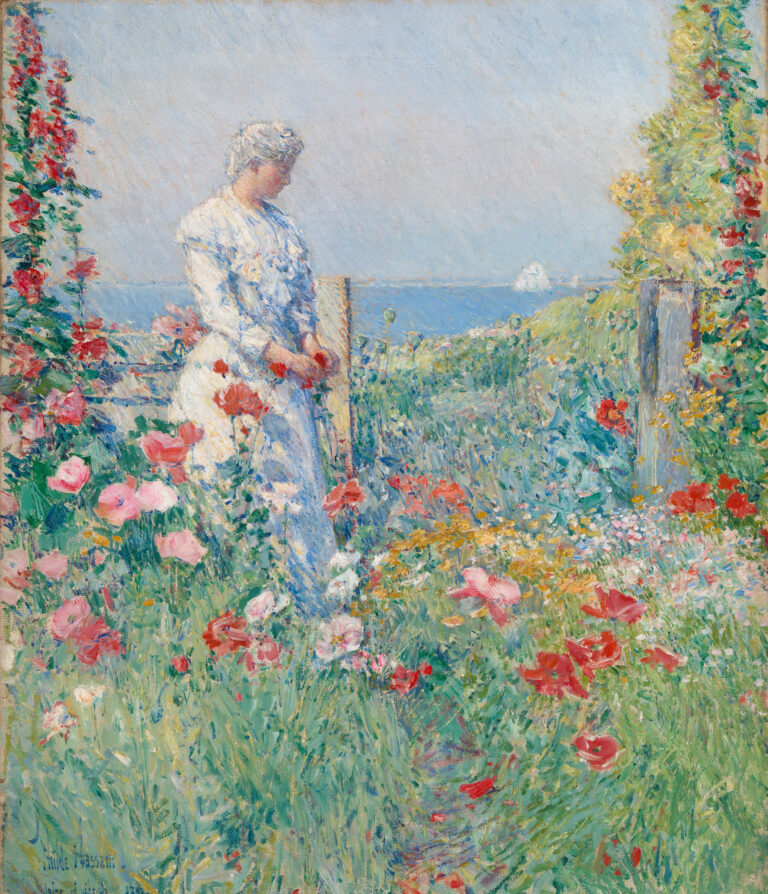
Celia Thaxter in Her Garden (1892). Oil on Canvas, by Childe Hassam. The garden was on Appledore Island, another of the nine islands comprising the Isle of Shoals.
Our daily routine: waking to the sound of the brass bell on the front porch. Washing and bathing with a small towel, a pitcher of hot (non-potable) water and a large bowl.
Reading a blackboard to find out what’s happening today; hot Wheatena cereal for breakfast. Then, shuffleboard; flying kites; spotting rare birds. Watching kids running around and an afternoon nap, awakened by gulls. Toasting mashmallows, folk music, and square dancing.
The appeal of this place, of course, was to escape all that’s new. It seemed everything was more than fifty years old. There was no telephone or TV. Guests were asked not to bring a radio.
Few of those at our Life On A Star “conference” chose to read the newspaper (there was only one copy, in the lobby). But sending postcards was expected.
In the rare emergency the staff called the Coast Guard on a marine radio, and an unplanned early departure entailed much patience: waiting up to twelve hours for the boat, longer in the event of a gale warning. Noisy intrusions were rare. Just once, I remember, a helicopter landed on the lawn. Another time we were hit by a squall that picked up a small gazebo and dashed it against the recreation center.
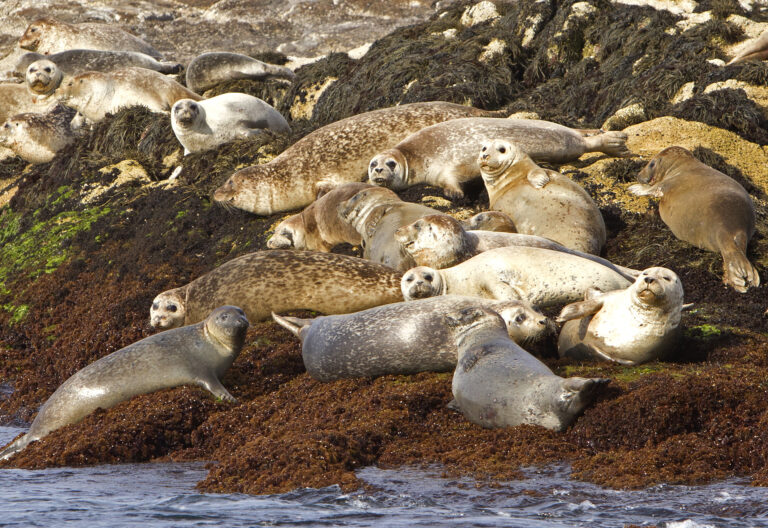
Harbor seals hauled up and basking on the Isle of Shoals, New Hampshire.
Photo by Jim Coyer.
Now, I’m headed back to Star Island. This vacation is a counterpoint to the “holistic” experience I had during the weeks in February (see Tết à Tête: A Motorbike Ride in Vietnam, Legacy Magazine, March 2026). Then, I took on anything and everything. I intentionally immersed all parts of my life into all the others. Now, by contrast, I am on a retreat, an escape. It was what, in February, I would have called hiding out on vacation.
Hiding Out — Where and From What?
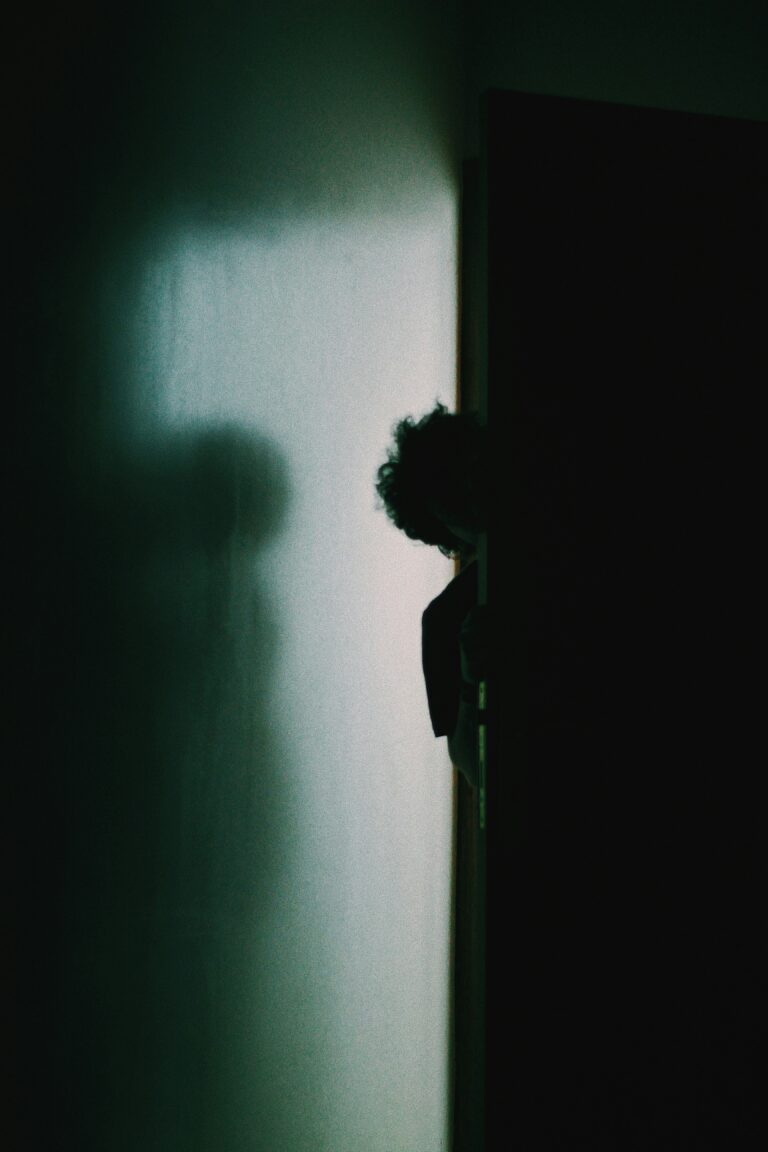
Photo by Ammar Sabaa
This notion of hiding out has a long and varied history in men’s circles. On my team, I’d be considered to be “hiding out” if I believed some untrue story, or failed to honour an unpleasant truth. The work is to face whatever pain might lie in confronting the fear and resolving to break free — knowing that whatever comes up will be handled.
Often, our contextual application of “hiding out” has a metaphorical hiding place associated with it. Over my many years serving in leadership roles, we have warned each other of the dangers of “hiding out in leadership”.
This occurs when a man is an exceptional leader in one area, failing in others, and pointedly not speaking up about that.
This February, I declared that this notion of “hiding out” could be generalised: to hide out meant to focus on any thing or area, successful or not, and ignore or actively avoid discussing any other parts of life, good or bad.
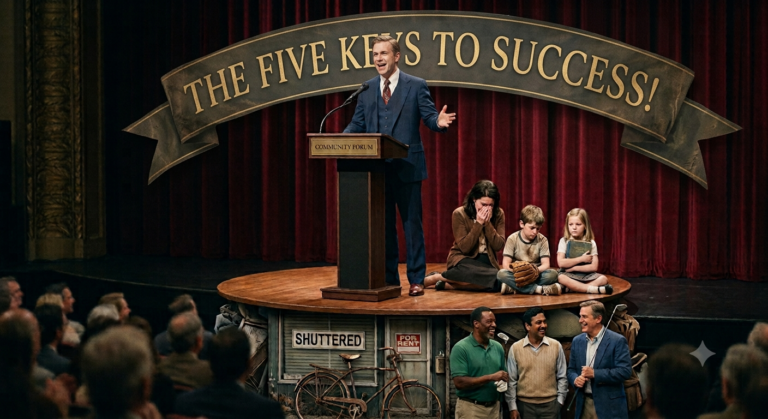
This image was creating using Gemini_Ai
So, I could be “hiding out” by enjoying a leadership experience while not addressing the chaos and physical clutter of my home office. Yet, I could just as truthfully be “hiding out” by focusing on the enrichment of travel while on vacation as a way to avoid focusing on or mentioning anything going on in the rest of my life at home.
I’ve seen this in my own past, particularly on those trips to Star Island during my young adulthood. I refused to answer questions about work or career until not answering became a habit. “I’m on vacation, I don’t want to talk about that,” was all I’d say. I partitioned one part of my life — financial success or lack of such, or teamwork dynamics in the workplace — from another… the friends I saw only during this annual island retreat.
A Place of Maintained Balance
And yet, even the Thaxters’ peaceful domain has not fully held back the relentless forces of future shock. Back in 1971, I wondered at what was hidden in the southwest, beyond the Children’s Boundary.
A few years later I was free to discover the power plant: diesel electric generators chugging away all twenty four hours inside a concrete bunker, and inaudible to the rest of the island simply by a well chosen location.
Today there’s a solar array and only one fuel tank remains. New Hampshire’s only salt-water-based treatment plant, built in the 1980s, occupies a dale in the northeast corner of the island. Reverse osmosis desalination was installed in the 1990s.
To see the shore or the sunset we stand on the west end of the island, where visitors are often spotted clandestinely peeking at their smart phones to stay in touch with the frenzied world they intentionally left behind.

Photo by Karl Hedin
This year I too am giving in to this, if only slightly: I’ve brought along a “dumb phone,” small as a credit card and capable only of simple phone calls and texts. I’ll check it every 12 hours but, despite this intrusion of tech, we come here committed to the spirit of living at a slower tempo, and largely we honour that.
The children here run as free as they did in my day, with few cares save the typical scrapes and bruises that kids always get. The same is true for the adult. They are free not just from threats of harm by strangers but from the all-too-frequent distractions of our ordinary lives. I fully expect that my time on the island will be an experience of heightened awareness. It may even exceed what I’ve been enjoying since my office renovation (see The Box Rebellion: An Addendum of Self-Evident Truths). Perhaps it will combine the effects of the mindfulness from my organized environment at home with those of withdrawral from excess stimulus that Star Island champions.
What's Great About This?
So I look back to the different types of hiding — hiding out in leadership, where I might have been unwilling to admit my own faults or shortcomings; or hiding on vacation, where I am getting away from both the daily and the moment-by-moment agitations of an all-too-unsettled world.
What’s great about hiding, as with anything, is the opportunity. What am I hiding from in this moment, and in this one, and this?
Photo by James Mowat
If it is stimulus, interruption, a life of agitations, or an environment of unwanted or irrelevant information — then perhaps I should be hiding from those more often. Maybe some of that “hiding” could be made into a daily discipline of renewal.
But if it is hiding from shame, from fear of ridicule, from embarrassment, or the pain that might arise from facing such fears, then I should consider how long I’ve withheld forgiveness or acceptance and held a burden instead.
And if the hiding is recent, to avoid looking back to the original event that rhymes emotionally with the present instance, then I might consider how much weight has been present in the back of my mind, fearing that memory or the onset of a similar event. It may well pay off greatly over time to emerge from my hideout, to work to release it now, perhaps by forgiving others… to let it go and realise I have not actually lost anything important.
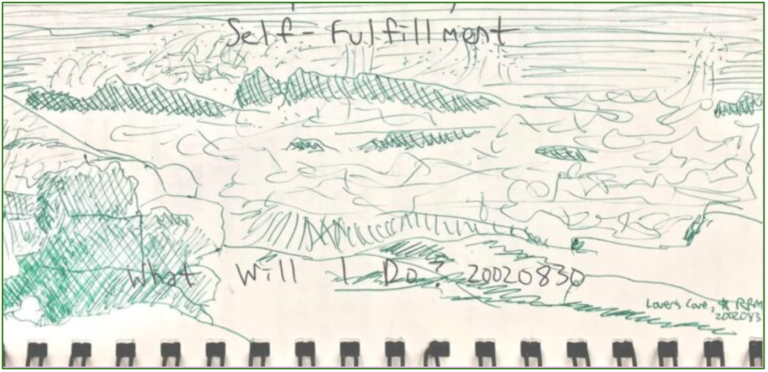
Sketch of Star island rocks, flowers and trees. Artist, Robert Munafo. Ink on paper (2002).
On the 30th of August, 2002, I scrawled an image of Star Island in my Island Journals and, amidst the sketch of rocks and flowers and trees, I declared for myself what I would do: Graduate school. Long-term committed relationship. Service to others. Spirituality. Self-fulfilment.
Twenty years later, having emerged from hiding, all five goals had been fulfilled.
About the Author

Robert Munafo is a polymath and student of the human condition based in Rhode Island.
He maintains himself with the help of the knowledge and techniques described at mrob.com/men
A Word on the Fronispiece...
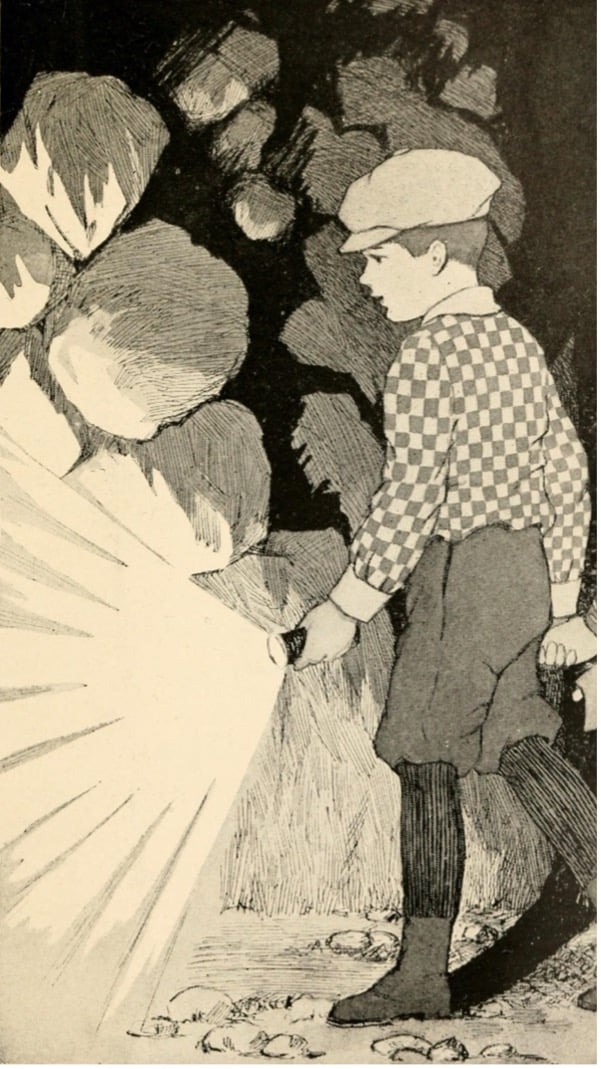
The frontispiece is a detail from this illustration of Curlytops on Star Island, or, Camping with Grandpa, by Howard R Garis.
It is an illustration by Julia Greene. Ink on paper (1918)