

Over a month later, they are still piling belongings on their front lawns — exercise equipment, flooring, dry wall, insulation, furniture, and pieces of wood are the norm.
But I’ve heard that deeply storied stuff also found its way to the refuse pile: war medals, jukeboxes, the dead’s belongings, perhaps in the countless black garbage bags piled into mounds littering the ends of some driveways. For the residents therein, I feel a burning in my eyes from my heart.
I also have a pile out front, though I have kept what I could salvage, or dry out, from the floods.
“This was a CAT,” according to Trevor, the first of my three demolition contractors. “That is code for ‘catastrophe.’” I think he was trying to make me feel something by identifying my deep disorientation with a word that might hit my walled heart.
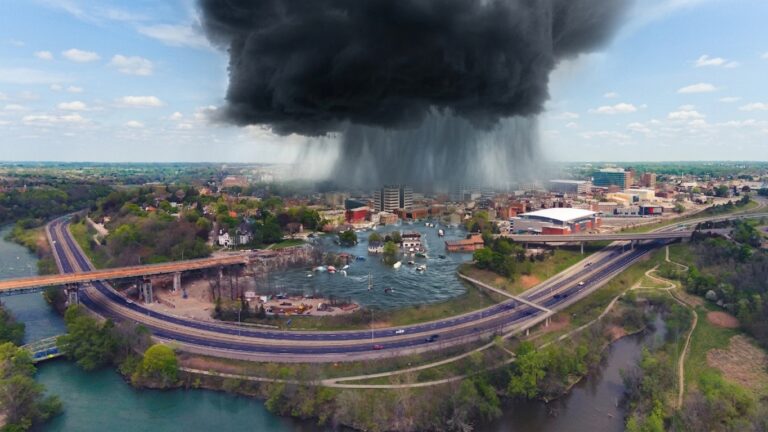
St. Catherines, Ontario. Original photo by Cityofstcatherines. Storm/flooding generated using Gemini_Ai
We suffered a series of floods caused by three storms dumping pails of water in a few hours. Each individual storm disgorged our average summer rainfall.
I don’t know if the forty days of rain Noah endured were more gradual or easier to acclimatize to but he likely did not have to contend with sewage from outside the ark.
The shit he faced presumably came from all on board, whereas we faced the excrement, urine, and kids toys that gravity pulled our way along the sewer, from the top of the escarpment to our home near Lake Ontario and the local water-treatment plant.
And to that, one neighbour offered words of convivial encouragement when she texted,
“We are all in this together.”
Other neighbours were less community-minded. One said,
“We didn’t flood. We were saved by the sewer setup down the street. But I guess misery loves company.”
“Saved?!”
I researched this setup and it’s a newly refurbished combined sewer overflow station that pumps raw sewage directly into the lake when the sewer system is overwhelmed (ironically, this lake was recently redubbed Lake America.)[1]
In my righteous anger that his waste never made it to my basement, I concluded he was suggesting that I was damned eternally. Another neighbour said, “I’ll just live with a wet basement from now on.”
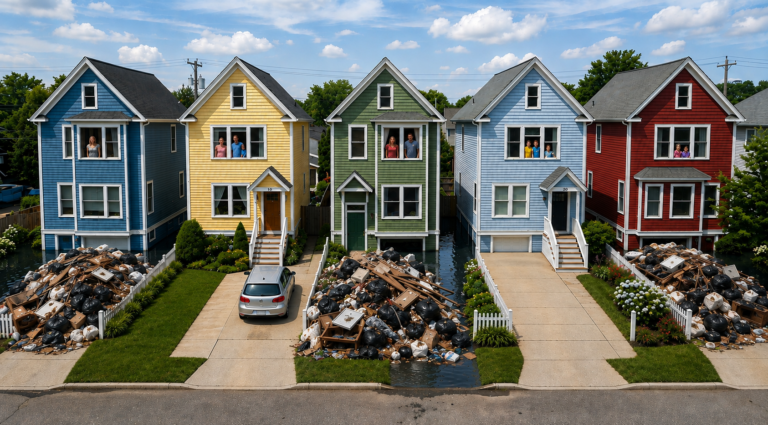
Image created using ChatGPT/Gemini AI
“We have to adapt,” another said. (This was something I could get behind, as I contemplate climate change and my grandson’s future). “But I never had any flooding. I was lucky I picked the right location when I moved here.”
‘Lucky,’ was less wounding then ‘damnation’ but, somehow, still had a flavour of “sucker!”
And I suffered this because my wife, my dog, and I moved here this past December 31, just eight months ago. Our new home, across the lake from the Big City, was to be my refuge from that city — where I was born and raised.
Photo by Zia Syed (altered by Word tools).
From here I can see it’s skycrapers, and unique cityline, through the haze. And here, I was to continue a journey of writing what I had started, some sixteen years ago: hundreds of poems for the people who, in my work, I nursed to their deaths in palliative care.
It was grave and sorrowful work. It was work that the hard concreteness of my heart in the Big City could not accommodate, nor expand any further. This called for a different perspective, a quieter place, one surrounded by water: the lake on two sides, the creek’s mouth on another, and vineyards and orchards holding this place fast from floating away. It was a place that said to my wife and me, “Come,” when we visited last year.
Surrounded by water we truly are. And this place is all sand — a sandtable they call it. And the sand is shifting constantly in its aliveness, and its relation to the subterranean streams coursing under the footings of our home. Some of those ended up in our flooded basement, bringing grains of the beach just down the road, to us. This sandtable couldn’t accommodate the pailfuls of rain, such that the water flowed, with gravity, around the foundation, into our sump pit, and up onto the floor, now mixed with sewage.
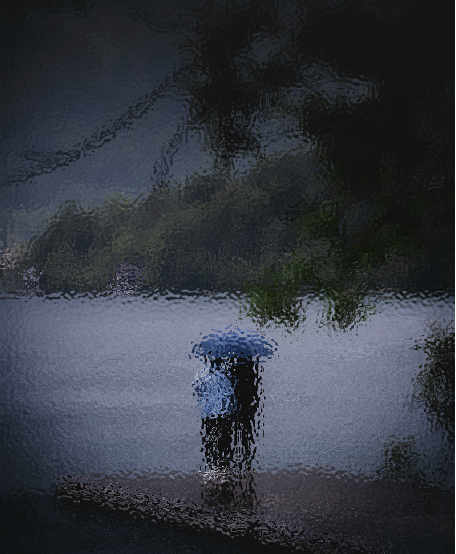
Original photo by Elias Maurer (image adjusted by Word tools).
And we are in community, a bigger part of my vision for this move. Our neighbour’s hearts might yet mix with our broken ones as the water, doing what it does well, runs to the lake. Like the water, there are places in me that also move sorrow; so that joy bobs up and along as my wife and I are free to prepare this home to fit us even more graciously then the way it came together after we moved in.
The insurers call it “reconstruction.” Insurance covers our losses — the ones that can be monetized and are less than five years old — but we will never be saved from this disaster: the way the stars line up in a new constellation taking shape from our imaginations.
And my friend pointed out a silver lining to me in all this when she noted that my new job started the day after the second storm, an olive branch of livelihood to counter the costs of reconstruction.
As I write this, I am surrounded by our belongings: sun-dried vinyl records, books, tools in plastic containers, my grandparents’ cedar chest, my other grandparents’ settee… They’ve all been stored in our living room for nearly forty days, since our home shrunk from a three-bedroom with finished basement to a two-bedroom (a ground floor bedroom was flooded by groundwater) with no basement.
Some neighbours use shipping containers and portable storage units on their driveways for the stuff they saved, reflexively leading my ungrateful eye to confirm my thought: we live in a world of excess. Until I gently remind myself how tightly material matters are bound up in the story of my life.
It’s supposed to rain for at the least the next five days according to the network. Rain opens past wounds in me, and I smell dampness in my nose.
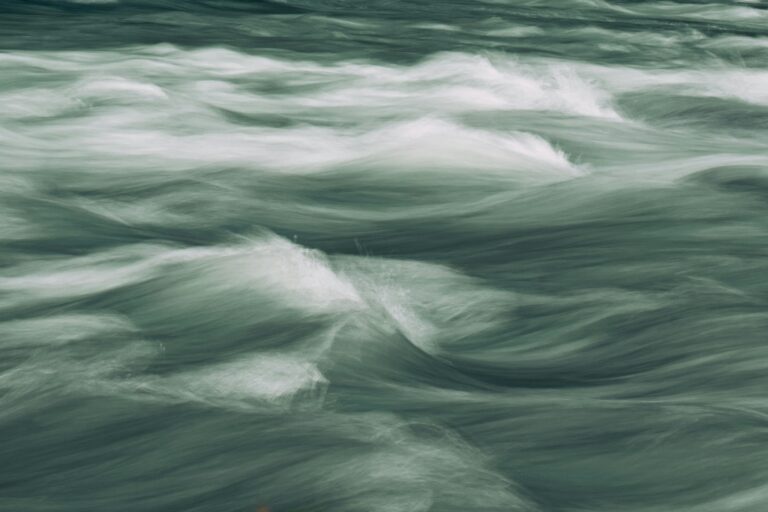
Photo by Zoe.
“PTSD” a friend said. “If I was flooded, I would drink and smoke weed all day.”
But I can’t afford such things, for I will miss the movement and aliveness of the water, sometimes in deluge, sometimes in the speed of a puddle drying out. And the wounds, trying to heal, sometimes as fast as insight; other times slow as the speed of the soul, and all expressions of life’s grace.
And I wouldn’t miss this generous way of water and wounds by choice, and my eyes burn again, knowing one day I won’t be here to miss it.
If you can show me how not to have gratitude for all this, please… don’t!
References:
[1] Lake Ontario has not been renamed in fact. Though one head of government has claimed to have renamed the lake, the order has no force of law, and Lake Ontario remains so named. – Editor
About the Author:
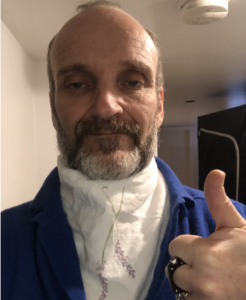
Dean Walters lives with his wife and their dog in southern Ontario, Canada, near his parents, siblings, children, grandchildren, friends, brothers, work, and religion (though some of his relations are more remote).
He is trying to learn writing and music.
A Word on the Frontispiece:
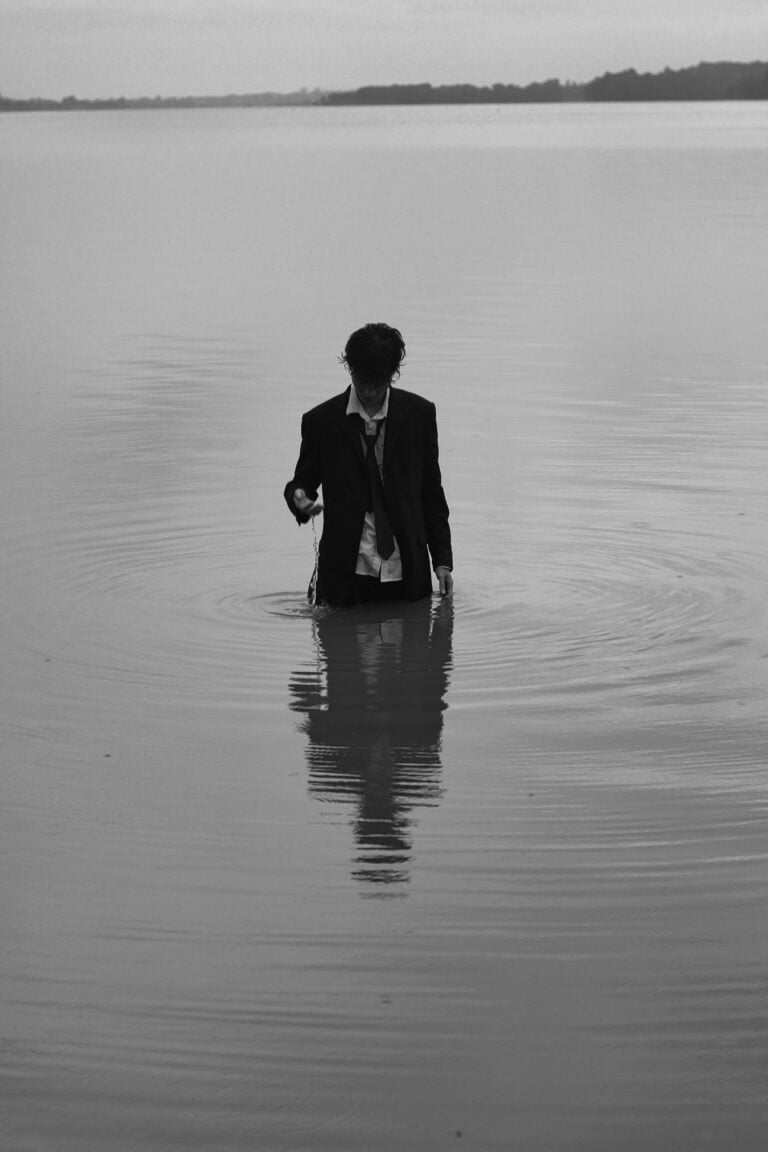
Photo by Bui Hoang Long