

I didn’t get up that morning, sixty years ago, thinking “how creatively can I fuck up today?” It was just a normal day in high school.
There was going to be a spelling bee to determine the school’s winner, and that person would go on to the next level.
I was a damn good speller, a word lover, a vocabulary enthusiast, and I was looking forward to it. I even liked diagramming sentences.
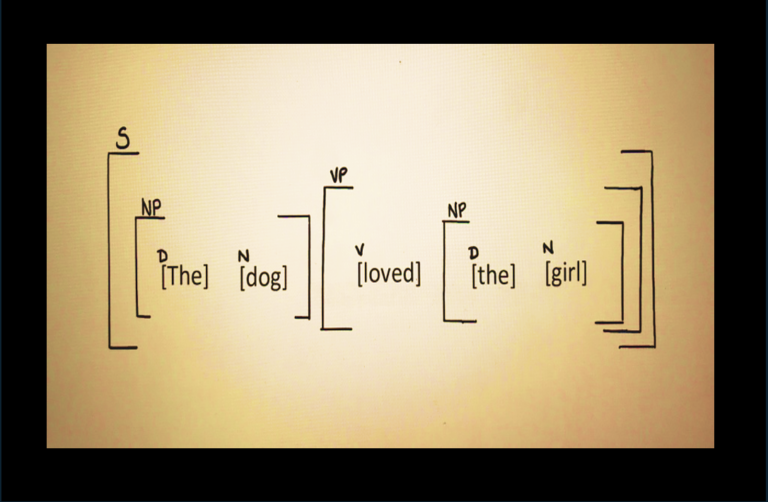
Image created by Gavina S.
At one point during the bee, my turn came around and I was asked to spell “parallel.” I knew how to spell it, of course, it’s an easy word. Any salted speller can dispatch it without breathing hard.
I opened my mouth to answer but, in that moment, from a thought unbidden, I decided to spell it wrong. On purpose. So, I reversed the double “LL”in the middle with the single “L” at the end and heard myself deliberately misspell the word out loud.
To this day, I don’t know why I did it. The deliberateness of it, the calculation, still strikes me, like turning the shower faucet the wrong way toward cold. It was unlike anything I’d ever done. It felt deeply counter my nature. Something had instantly kicked in that outweighed whatever competitiveness ,and desire for achievement, I might have had.

Photo by Matthew Menendez.
The memory has lived in me, like a burning bush, gently interrogating me over the decades, never being consumed by time. I can’t say I’ve felt angst, or even regret that I did it. But I sure have wondered why I did it. It is a puzzle for the ages.
Sure, I was a testosterone-filled teenaged dumb-ass, not looking too far down the road. And, since I’m not terminally unique, I imagine there have been many others who, for whatever teenaged reason, blew themselves out of a competition.
But why did I do it?

Photo by Roman Mager.
I remember, after taking myself out of the game, sitting down feeling at once satisfied and… and something else. Confused, maybe? Satisfied because I learned, in some perverse way, that I could control outcomes? I remember a frisson, a little tingly shiver of energy, almost an adrenaline rush, as I sat back down.
Was it because I had divined how much more important STEM courses were than “language arts,” and didn’t want to be seen as a grammar geek? On some level I might have been thinking, “this is not what I want to be good at.”
Still, I was confused because who the fuck does that?
Someone who wants to hide, that’s who. Someone who was, in truth, hiding his lamp under a bushel per the Sermon on the Mount. I admired Jesus, especially then, but I’d ignored his call to light up the world with my talents. In Sunday School I sang This little light of mine, I’m gonna let it shine…[1] I forgot that, too.
Photo by David Trinks
I learned I had the power to hide out and it must have gotten into me deep. Knowing you have the power to hide out, my God, what a trip!
Lawrence Durrell wrote that “somewhere in the heart of experience, there is an order and a coherence which we might surprise if we were attentive enough, loving enough or patient enough.”[2] I think there’s something here to keep poking at in the heart of my experience.
I learned I could take myself out, with intention. From there it was a short slide to having it be unintentional, unbidden. Subterranean, even.
The heart, the throughline, whatever it is Durrell was referring to, also obtains in my sort of protectiveness, defensiveness about the dignity of my labor: as a grocer for the last twenty seven years before retirement; about where we’ve lived, an old mill town where we could afford to buy; and the fact that my first marriage, at a young age, brought me into a wealthy family and a great deal of money that I didn’t earn.
I found that I could easily sidestep questions about where I worked and where I lived and how that first marriage could have happened. I could hide out, even if it was costly to me.

Mills along the Merrimack River, Lawrence, Massachusetts. Photo by Terageorge~commonswiki
Hiding out is, I found out, a moveable feast. Yet, though feast it may be, having had my fill, I no longer want it on the menu.
References:
[1] Traditional African-American spiritual based on the Parable of the Lamp, Matthew 5:14–16 and Luke 11:33
[2] Lawrence Durrell, The Alexandria Quartet: Justine, Balthazar, Mountolive, Clea (London: Faber & Faber, 2012)
About the Author:
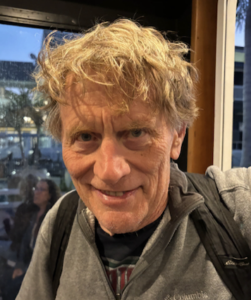
Craig Jones is the author of tens of thousands of unpublished notes, a Red Sox fan of distinction, and a retired purveyor of both books and fine cheeses. A one-time climber of Mount McKinley, he is an
omnivorous devourer of books of all types. For two years he penned the twice-weekly blog, Notes from the Gratidude. He credits Legacy Magazine with helping him find the balls to finally say, “I am a writer.”
Now retired, he lives outside Boston with his wife, Karen.
A Word on the Frontispiece:
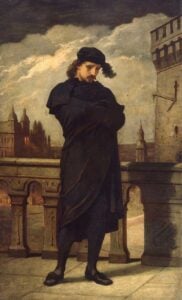
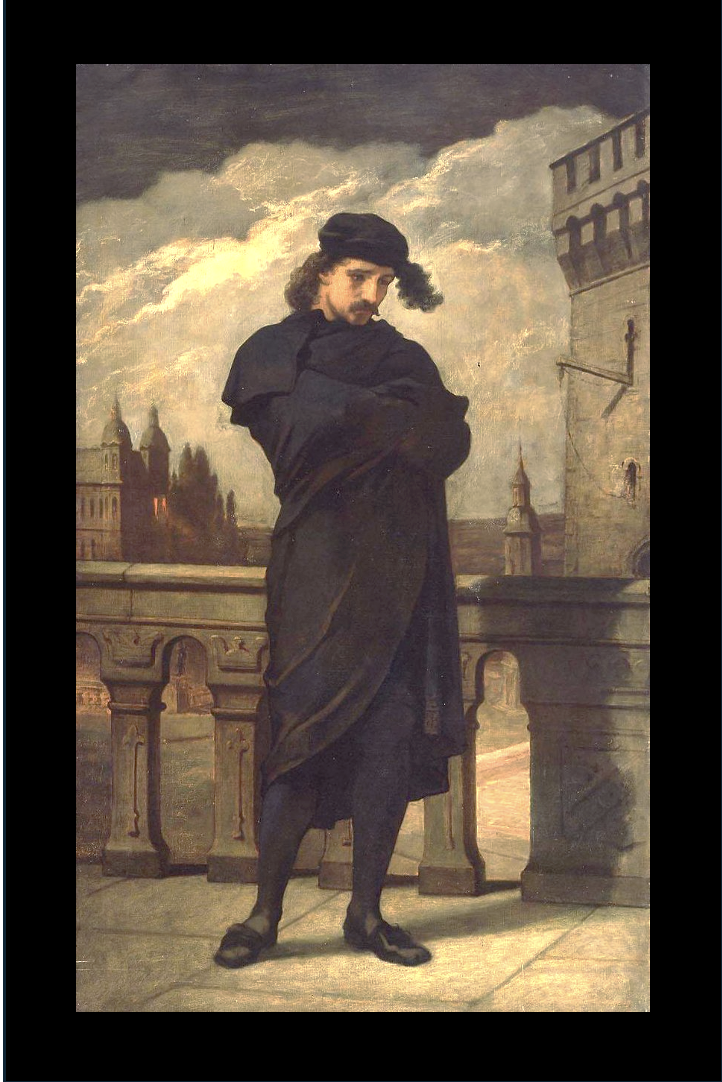
Hamlet, by William Morris Hunt (1864).
Oil on Canvas. Museum of Fine Arts, Boston