
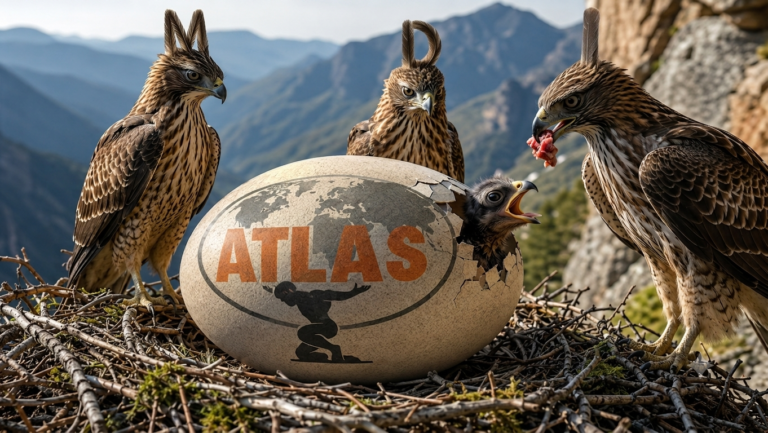

I heard so many men say “this will never last.”
The thing I remember, from years ago, what was being promoted about Atlas was the notion its purpose was to build in-person teams where MDI had no presence. Most of us couldn’t have predicted that this was a viable thing that men would want just as it is.
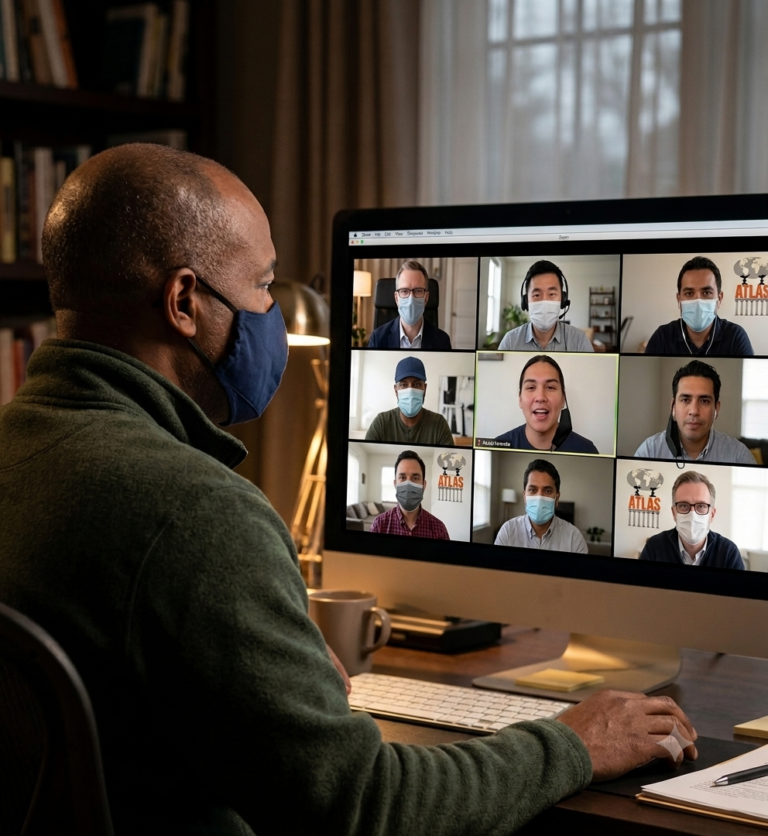
Image created using Gemini_Ai
The switch happened because of Covid: suddenly, everyone was online, and they all said, “Oh! Right. This is a men’s team.” They learned, among other things, that it’s one thing to sit in a circle in the dark and try to see every man’s face, but you really can’t. Yet on the screen, you’ll see three other men’s faces react to the same comment and think, like, I’m not the only one!

Image rendered using Gemini_Ai
The original decision to put Atlas under the Canadian region was, we thought, because that region was large and was used to managing large issues. But so much of what they had to do with in-person wasn’t actually correlating with Atlas. So the Atlas leadership, meeting with the Canadian region, said, “why am I here? So much of this is about the Canadian region. We need our own region.
There were some things where Atlas had to get creative… things like fun, or a push, and the Men of Atlas have come up with some great workarounds.
On the other hand, there are some things an online Tribe or Region can do that ground-based men can’t. The men can all meet at any time. You can have quarterly Regional meeting, or really, meet as often as you want. What you can create a culturally cohesive feeling in the region and that is something the rest of the organization can’t do. And just yesterday I learned something I hadn’t known: Atlas teams were attending division meetings and their own team meetings in the same week. On the ground you can’t really do that. The logistics of time and travel make it nearly impossible.
Tager (Matt Tager, then-VP of Ops) could see it, he was about to flip the switch, and we were hours away from the Atlas division meeting where the announcement that Atlas was becoming a Region was going to be made.
But some men on the International Team were smart enough to ask, “why shouldn’t this happen?” One we asked the question we started seeing red flags. There was a lack of trust and consistency coming from higher leadership to Atas. We didn’t mean it to be like that, we just didn’t want the transition to fail.

Photo by Jon Tyson
We should have been more aggressive, going in the direction of creating a new Region, but we weren’t comfortable we had the leadership bench. We thought, are we going to kill off this beautiful thing that’s been built? Are we going to screw it up if we act too quickly and without proper planning?
But truly, [Atlas Division Leader Joseph] Ranseth was a fortunate exception for us. There aren’t a lot of men who could manage running fifteen teams… maybe there’s a handful, and he was one of them. I had to respect that Ranseth knew his men. The times I came on his core team, it was about as unified as I’ve ever seen at any level. So we had to trust. We thought, we’re going to extend a runway, give some guidance, but if they arent making critical decisions on their own then we’re just dictating.

Photo by Jonathan Letniak
We weren’t going to do that, and so it took some time. And the very first Atlas Division meeting I went to, to see how challenged men were in implementing things over fifteen teams — an unheard-of number — Eliopolo [Atlas Growth and Enrollment Manager] blew my mind. His capacity to call and call and call each one of those Teams’ leaders was impressive, but we all knew it wasn’t sustainable. The S1s — Rempels team — and all the others, the same. I’ve long held that we don’t necessarily need all these positions we have. Teams, and even divisions or regions, could probably get by without some of them. But they’re an opportunity for men to step up as leaders, maybe in a way they can’t do in the rest of their lives.
A man who’s been in the trades for twenty years, who perhaps has never led anyone, steps in here and says, “Wow! I can do this.” The opportunity for this in Atlas right now is unprecedented. Atlas needs a Regional Coordinator. Three new Tribe Leaders. New Core Teams for all of them. Some of those will be filled with current team leaders or members of their own core teams which leaves room for even more men to step in and practice leading.
We knew all this, of course, and it was daunting. There are a lot of men in Atlas (120 at last count) and often men presented with leadership opportunities balk or look at their shoes.
And inevitably, there are going to be some growing pains. The transition process, from huge division to becoming a multi-tribe region, was delicate. It wasn’t me solely doing this, though it was my job to lead it. Our number-one result thoughout — unattached to how we got there — was, “we’re not breaking up teams or shuffling up teams or doing anything to how the teams are currently constituted. We cannot disturb that.”
I don’t know if Ranseth will ever experience this, but I did have a significant amount of trust that, within a small number of bouhdaries, he, his core team, and Atlas generally, could pull this off. I always came back — and I wasn’t alone in this — to result number one: zero disruption to the men’s team experience.
Looking at it early on though, it seemed hard for some of the men leading Atlas to understand, but we on the International Team thought, “if we split this up, what will we lose?”
Atlas has shown it will continue to grow so, if it’s going to split, we have to leave it room and structure to grow. These teams and tribes are going to start to connect and they’re going to participate on their tribal leadership teams… over time it’s going to bear some fruit.
As for the process, it turned out the atlas experience had more in common with the in-person experience than we thought. Even so it was a bit of a tug of war. It certainly gave me some knew understandings of leadership — to give a long leash… to trust things. To work on the relationship.
I’ve had experience with people worrying about what I was going to impose on them. I think there was plenty of that in this process, but for myself I always came back — and I wasn’t alone in this — to result number one: zero disruption to the men’s team experience.
As an outsider, I had no idea how to break up a division of fifteen teams into three separate tribes under a regional umbrella. Should it be done by time zones… or based on your country? Those broke down instantly because they came up against rule #1.
“Our main focus was to do what was best for the men. We didn’t want to do anything that interrupted the flow of the teams. I think it went surprisingly well and our Atlas Transition Team — Dave Yale, Stan Snow, Geoff Tomlinson, Denis Moreau, Chris Christopher, and me — did a great job. Personally, I’m hoping that men who previously have not held a leadership position get to experience one as a result of this growth and expansion. I am proud of the men of Atlas for all that they have done. Our Team intends to document the actions we took so there is a step-by-step document for future splits of this nature.“
– Tom Thurmond, MDI Vice President of Operations
What Atlas has indeed come up with is the probably the most elegant solution: to leave the teams alone, combine teams by the days they meet into tribes, each with about forty men. That was right and proper and we at the international level weren’t getting there.
As for Ranseth, he was going through something many division and regional coordinators go through. Division leadership is actually a regional position — you’re part of the regional core team. Regional coordinator is an international position, a member of the International Core Team. I remember, back when I was regional coordinator, a division leader who just wasn’t getting this concept. So I said, “you know your team leaders are division-level leaders, right?” He laughed. He got it but It’s a little bit of an adjustment.
Anyway, before we finalized things, the Division Summit was held in Massachusetts. Ranseth showed up on the first morning, and where he was when he came versus his context when he left were utterly different. We were all trusting in him, and supportive, and wanted him to win. When you’re gearing up for a fight and it doesn’t show up…
But even after that, what I weren’t prepared for, I was expecting to get to the fall and I’d have to push the pace on this. But the Atlas core team surprised us. All of a sudden, Boom! They’re ready. They’ve split. They have it all handled. It was a nice surprise. None of us had expected that.
“I was worried our men would be too saddened by any separation, that we could see attrition; that if we couldn’t hold this strong enough, the men would leave.
It all turned into excitement as we put it all together, the opportunity for the ‘container’ of Atlas to expand to more men; reducing the burden on the leadership team so they can refocus on the men; the space for more men to move into leadership, to receive the gifts its brings. We have three new tribes and three new tribe leaders, selected by their men.
I’m elated to see what these men bring that this core team could not. The absolute care and support I have heard in these meetings has lifted my heart. I can say for certain that the men of Atlas, no matter their tribe, will cared for, supported and challenged to grow.”
– Kent Pearson, Chief of Staff, Atlas Region
So in the end, the elevation of Atlas was one of those things where you write your CPR and agenda and none of it goes according to plan. But if you got the results you wanted, do you really care if the agenda went to shit? The Atlas men were there: the teams weren’t split up; the men selected the tribes on their own; they’ve already created the tribe names and elected leaders. All without any meddling by the international team. It’s exciting.
All this points out something unique about MDI. In our regular lives, the only man who actively wanted you to surpass him is, usually, your father. But here, there are many men who are rooting for you to do just that. That’s what this whole thing was about. Atlas is the direction we’re going and the men outside of Atlas wanted it to grow even if it’s growth and reach was faster and farther than the rest of us are achieving.
The Atlas core team did a brilliant job at the most recent Division meeting… or more properly, at what turned out to be their first Regional meeting. As those leaders looked around the breakout room holding their new tribe, you could see all the men saying “I know some of these men, I respect some of these men, I can see this thing coming together.”
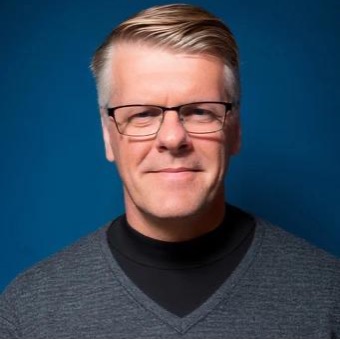
Jeff Craven, winner of this year’s Atlas Award.
The Annual Atlas Award goes to the man who has best embodied the four pillars of Atlas:
 Bear Responsibility in Service to Others
Fix What is Broken
Have the Courage to Hear and Speak the Truth
Create Powerful New Patterns
That meeting was amazing. The Atlas Man of the Year award presentation. Celebrating the eight birthday of Atlas… There was something brilliant… they didn’t come at it from, ‘here’s what you need to fear’ about this transition. Instead it was, “we’re winners and we’re about to win again.” I had nothing directly to do with any of that, but at least I got to witness it, and to be proud. We’re going to learn a lot from Atlas, for a long time to come.
About the Author
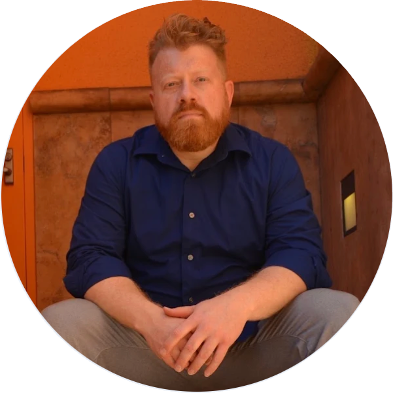
Dave Yale is…