


Tool-Time, Revisited: A Riveting Column
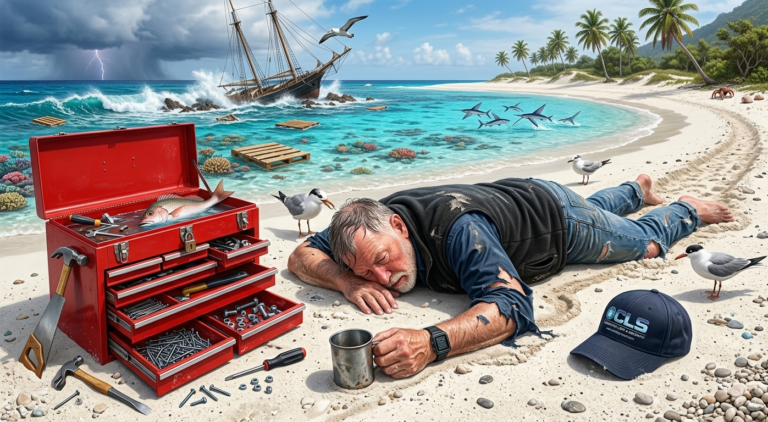
You’re alone on a tropical island. White sand. An incredible turquoise lagoon. Warm tropical waters lapping upon the sandy shore. Flying fish, a lone albatros, and nothing else but a distant blue horizon.
There’s no cell phone service, no iPad, no AI or car insurance to stress about. Nor is there email or politics, nor even a radio. In fact, there’s almost nothing that wouldn’t have been recognized a century ago. Ahhh. How relaxing! Except… you didn’t come for a vacation. In fact, you never meant to come at all.

Albatros. Photo by Hans-Jurgen Mager
When you finally lift your head, shaking sand and salt water from your eyes, you see the wreck of your two-master across the lagoon. Now it comes flooding back: your ship was driven there by a sudden and violent squall that gusted up from the south without warning, with pelting rain and whipping winds. It was gutted on those coral spines and is now sinking fast.
There were no other survivors. You only made it to shore by holding tight to a wooden pallet that fell from the deck and carried you, torn and bleeding, to the shore of this lagoon.
You’re in a tough spot. Food is no problem: there are fish and seabirds and coconuts aplenty. Water, too, is abundant in the waterfall you see spilling from a cliff farther up the slope. But you have no shelter and no hope of rescue unless you can contrive it yourself.

Eighteenth-century wooden tinderbox with firesteel and flint.
Image by Baldovio.
By the grace of God—and your own dogged refusal to give up—as the boat was capsizing you remembered to grab your Ultimate Home Tool Kit. You always keep it close, so both you and the kit escaped Davy Jones’ Locker and made it ashore in one piece. Some more wooden pallets that were thrown overboard also washed up on shore, so you have some clean wood.
For some reason, by some odd quirk of foresight, you had added a short-bladed rip saw, a tin cup, and a flint to your kit while still in port.
“After all,” you’d thought, with true carpenter’s training, “it’s always better to have it and not need it than to need it and not have it.”
Well, now you need it. Because, as tired, cold, and water-soaked as you are, your first priority is to build a shelter and make a fire. As your senses return you take stock of what will be needed.

Photo by Zhan Zhang
“Let’s see,” you think, “I have a five-sixteenths, flat-bladed screwdriver that could be used as a chisel. I have my old claw hammer. It can be used to drive the chisel. In a pinch, the claws could double as a makeshift axe or be used to pry the pallets apart.”
“My saw will help me shape the pallets into a rude hut. Anything left over I can use for firewood and, thanks to my foresight, my flint is handy and will help me ignite the wood. Of course, there are plenty of rocks around to make a firepit in the dunes above the waterline.”
I like the way you’re thinking! Food: available. Water: available. Shelter: TBD. Fire: TBD. But that’s just for surviving a few days. How are you going to catch the fish (besides the one that fell into your toolkit)? In what will you carry and store water until you are rescued?
For that matter, how will you give yourself the best chance to be rescued… for a passing aircraft or ship to know you’re there and need help?
Well, you have the tools. You have the flint. You have training in the building trades. What is your first step? What’s your second? And what’s the long-term plan?
Let me know at media@mdimen.org.
About the Author:
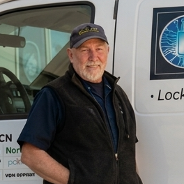
Matt Coddington is an award-winning, San Diego-based, commercial locksmith. He is a former paperboy; a former avid collector of baseball cards and a former musician and Drum Corps International world champion; . He is sixty-three, single, and has no children. He does, however, have a sister, Linda (about whom he has written elsewhere in this issue of MDI Legacy Magazine). His current goal is to relocate to Tucson, Arizona where the next chapter—whatever it may be—is set to commence.