
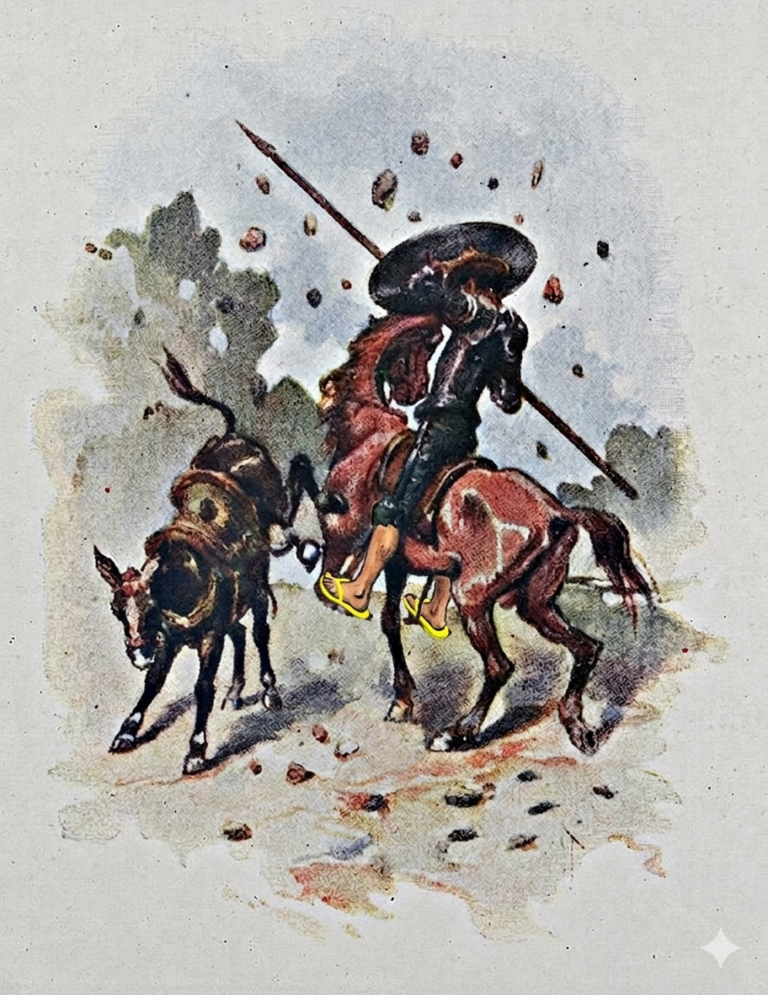

Beach combers are an iconic sight on shorelines everywhere, and here, along the Atlantic coast, is no exception.
It is low tide and, as I make my way along this sandy sliver of eastern seaboard, I see treasure seekers. They are walking slowly, heads bowed almost meditatively, looking for something the tide might have brought in overnight.
Some have tools of the trade like grabbers, rakes, nets and little bags to carry found objects. Metal detectors too, of course. Others are squatting or even sitting, searching and sifting intently, in postures that evoke the forty-niners panning for gold in a riverbed.
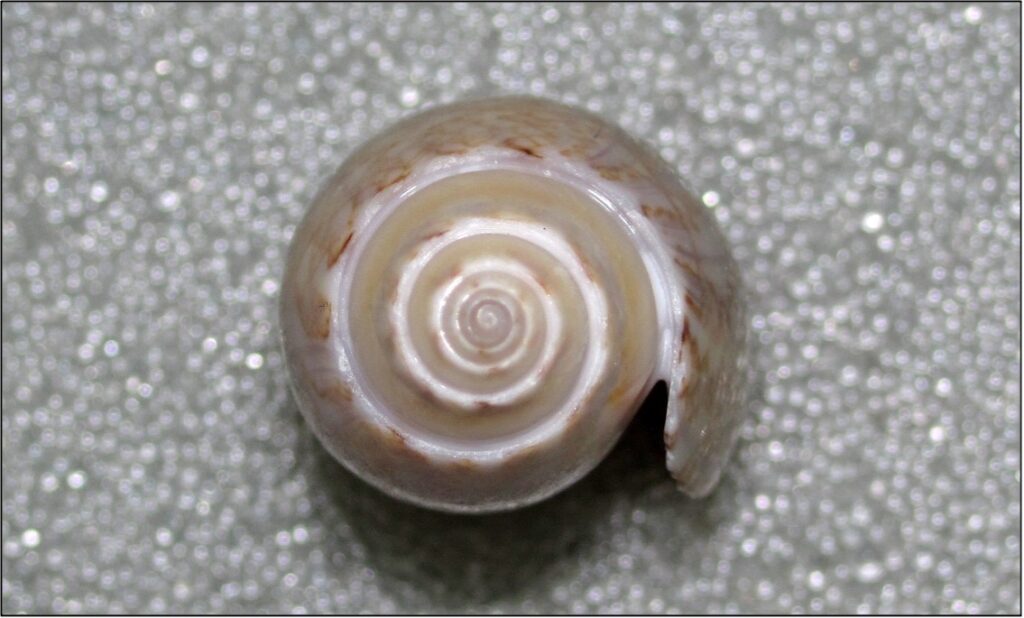
Lettered Olive (Oliva sayana) sea snail shell, Marco Island, Florida.
Photo by James St. John
Indeed, during the annual southern foray with my wife, I have also stopped to identify shells that struck me as beautiful. I found a lovely whelk shell and used the internet to find the name of the Lettered olive, the carapace of a predatory sea snail which, I learned, is the official shell of South Carolina. Who knew?
We are acquisitive, we Homo Sapiens, that’s for certain. We seek shiny objects but also crave beauty and hunger for the sublime, but at base we are acquisitive.
And so, apparently, are some of our simian cousins. The New York Times1 recently reported that chimps are drawn to crystals and will pick them out from duller rocks and pebbles. One scientist remarked that they “apparently share our own fascination with lustrous and translucent objects.”
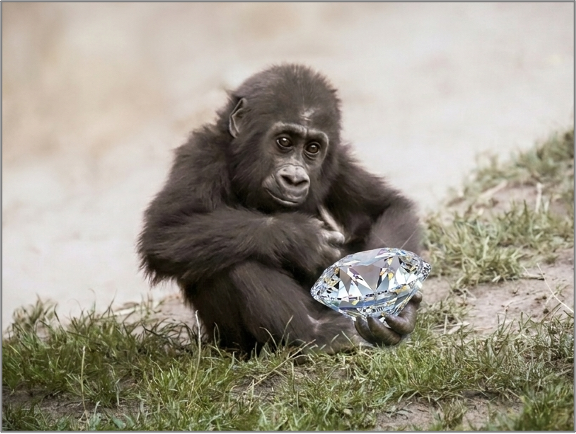
Photo by Mariola Grobelska, adapted via GeminiAI
The Smithsonian cites archaeological evidence that our hominid ancestors have treasured quartz and calcite stones for almost 800,000 years.2 They often brought them to their shelters for safekeeping, though they served no apparent practical purpose.
Somehow, somewhere along the evolutionary path, we made these little shiny things mean something. To our simian cousins there’s just the bright and shiny object, devoid of “meaning” in any sense we humans understand. Shiny things, and dull things too, are without meaning until we give them some. Crystals and other gaudy baubles like gold are just rocks until our imagination takes over.
Gold is interesting. In the crystal experiment alluded to earlier, pyrite was added to the pile and chimps went crazy for it just as for the crystals. Pyrite—iron disulfide—has become known among us sapiens as “fool’s gold.” Chimps couldn’t care less if the gold is real or fool’s, but we sure do.
Fool’s gold has become a metaphor for the quixotic quest for that which might be life-changing—if we just got lucky enough or worked hard enough—only to have it be a bust.
I, too, have been fooled by the bright-and-shiny object and there’s no pretending otherwise. In my own past, there’s a long list of prospecting for gold that ended with iron pyrite.
That coed I saw in freshman class, the one with a nice ass who became my future ex-wife, for example. Or maybe this men’s weekend, or some other, will be “it.” Perhaps this next book will do it. Definitely, if the Red Sox win it… Or this Everlast T-shirt might be like an amulet; if it doesn’t actually imbue me with fierceness and courage, it will at least remind me.
Maybe if I buy this motorcycle, and keep my ponytail and beard after climbing in Alaska, and smoke enough weed. Maybe just once more “unto the breach” will satisfy me. One more gold claim, one more panning placer.
I have a long history of hoping this particular thing I’m doing will finally lead me to the promised land; and just as long a history ending up still wandering in the wilderness. The question that arises, however, is this: was it all wasted time?
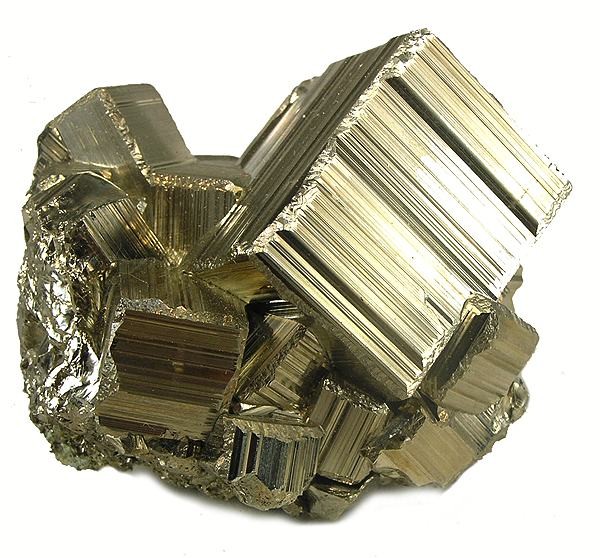
Peruvian pyrite. Photo by Robert M. Lavinsky
How many, I wonder, of the prospectors who went to Sutter’s Mill or the Yukon and who, after much toil, expense, and suffering, only ended up with iron pyrite for their trouble, have asked that question? Was all that time a waste?
I asked it after graduating from college with a BA in sociology. I got the shiny object but saw it as basically worthless: fool’s gold.
Turns out, though, that iron pyrite isn’t actually worthless. It has some use and some value: jewelers use it, for example, and some manufactures, and it’s even used in actual gold prospecting.
Of course, it isn’t worth nearly as much as gold and, of course, that’s because of what we have made it mean. Rethinking its value now, I did use my BA to get into Seminary, and hell, at least I eventually graduated from college, and that’s where I learned critical thinking. And the list could go on. Even the process of getting the BA taught me something.
So, it wasn’t all wasted time and money and effort, digging what I thought was a worthless nugget from the earth. And I’m now thinking that, perhaps after all, none of my adventures that ended with what I thought was fool’s gold were for nothing.
I wonder if it has always been about the journey, anyway, the value being in the seeking rather than in what lies at the end? It’s like Robert Pirsig wrote in Zen and the Art of Motorcycle Maintenance,3 “Sometimes it’s better to travel than to arrive.”
After all, even the great Quixote was defeated in the end. He was forced to return home from a quest, even as I’m about to do from the Carolinas. He regains his sanity, gives up his knightly delusions, and dies as his true self. If I can just do that, then in the end, it hasn’t been fool’s gold.
- Cara Giaimo, The New York Times, March 4, 2026. Chimpanzees Are Really Into Crystals ↩︎
- Sarah Kuta, The Smithsonian, Chimps Seem to Love Crystals. Their Attraction Might Help Explain Humans’ Obsession with the Shimmering Stones ↩︎
- Robert M. Pirsig, Zen and the Art of Motorcycle Maintenance: An Inquiry into Values (London, England: Vintage, 2014) ↩︎
About the Author.

For a number of years, Craig Jones authored Notes from the Gratidude, a twice-weekly blog exploring gratitude and abundance. He is a life-long Red Sox fan, loves climbing in the White Mountains, and credits Legacy Magazine with helping him find the balls to finally say, “I am a writer.” He is now retired and lives outside Boston with his wife, Karen.

A note on the frontespiece:
The image toping this story is a GeminiAI adaptation of the this watercolor, known as El Ingenioso Hidalgo Don Quijote de La Mancha (The ingenious Hidalgo Don Quixote de La Mancha) by Salvador Tusell. This in turn was taken from the famous compositions of Gustavo Doré. – Editor