
There’s a ton of stuff that I’d want my Younger self to know.
One concept would be becoming a patient man growing into his mature self through his twenties, thirties, forties, and fifties. The biggest gift I can give myself — and others — is to learn patience. Learning how not to be so impulsive in my thinking process helped me think things through before I acted, and to make better life choices as I aged. That, I think, is a good place to start.
I’ve also learned that, hand in hand with patience, is learning how to utilize my imagination to improve the way I think. No one teaches us how to use our imagination when we’re young, and that’s a shame because it’s so vital to how we think about life.
I learned that the same pool of thought that creates the lyrics I write, and other things I create, comes from the same pool that is self critical, judgmental, and often times self deprecating. I can learn how to be more positive if I can learn to exert more power over my imagination. In other words, learn how to manage how I think about something so that, rather than my thoughts ruling me, I can rule them. If I can direct my thoughts better, I can steer my imagination away from running amok, and see things more accurately and with more perspective — a clearer sense of what’s true and what is bullshit.

The author (left) and friend Scott (right). This image was on the cover of
Drum Corps Magazine, Vol. 13, No. 9, July 27, 1984. Photo by Art Luebke.
A side benefit of this is the ability to be more logical, less anxious. This has enhanced my ability to see things more practically and thus has helped in my counseling practice.
Under all my learning, and the wisdom I’ve accumulated, is the need to really establish trust in myself. Without trust there’s nothing you can teach because you can’t back it up with examples. If I had developed trust at a younger age, my younger self would’ve had more confidence, and not had to struggle for so long to gain it. Once the trust came, I developed more clarity. This helped me make more concise decisions when it came to the family and leadership roles I’d undertaken.
Trust in myself gave me the roadmap to learn to be comfortable in my own skin, to truly be comfortable with others; to feel good about who I am and what my intentions are. If I’m clear about those, then when people attack me — emotionally, verbally, or otherwise — I don’t have to take it personally. It’s about the other person, not about me directly, and because I’m clear — about who I am and what I stand for — I can keep my wits about me when confronted. That is so much more freeing than being clouded in my thoughts and thinking I did something there’s a good chance I didn’t do.
This insight has also been a big help in my psychology practice, thus helping me help others feel more effective.

The author (left) and friend Scott (right). This image was on the cover of
Drum Corps Magazine, Vol. 13, No. 9, July 27, 1984. Photo by Art Luebke.
Now, when it comes to discussing the man-woman dynamic with the young me, that would be a challenge. I didn’t know a thing about women when I was younger, and I’d point out that I still don’t have a handle on it. But the main lesson is that they are different and it’s being able to spot the differences that can help a me understand them with greater dexterity.
Learning to find the complementary pieces my wife brings me helps me become a more informed man: when it comes to raising children, making life decisions, or finding someone better at the details than I am. The pieces she fills in make me a more complete man. Having been married for thirty years, I can tell you that understading this concept will help you to be more effective in life. Learning how to fill in the gaps with another’s perspective is priceless.
There was a time when I felt that perhaps I’d never learn these things, that good things would never happen. Teaching myself to be patient helped me: I realized that, by not rushing into things I could actually make good decisions, find something that was durable and within a range I could work with as a life partner.
And I learned — trust again — how to coexist with my wife despite not understanding females. To that young man I say, keep that childlike spirit alive and well. Find ways to restoring a child’s way of seeing the world with awe. Yes there are disappointments, and roadblocks along the way, but don’t take things at face value: look at what might lie beneath the surface and you might find the resiliency that will make it all worthwhile.

The author (left) and friend Scott (right). This image was on the cover of
Drum Corps Magazine, Vol. 13, No. 9, July 27, 1984. Photo by Art Luebke.
I guess, in the long run, learning to be the mature man that I’ve become helped me create a good life. Telling my younger self some key points probably would’ve got me to get to the good stuff sooner. Mentoring that man would’ve been enjoyable, too, seeing how my two sons are with me now. This is the funnier, and perhaps the more poignant, when I recall that as a teenager, I swore I’d never raise my children like my father raised me. Not that he was a bad father. He was just too serious and couldn’t allow himself to relax to enjoy his own life. In a way, his shortcomings paved the path for me to learn from him how not to be, and what to actually shoot for, without needing him to tell me what he wanted me to learn.
Sometimes, the best life lessons are unspoken.
About the Author
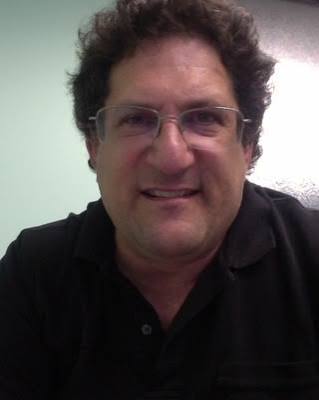
Mark Gofstein is a clinical psychologist specializing
in children’s needs, parenting,and anger management.
He is married, has with two sons, and lives in Massachusetts,
He is a long-time member of MDI.
About the Frontispiece

This image was generated using
ChatGPT and Gemini AI.