

An extraordinary thing happened last night. I am still trying to get my head around it, but for now I’m both baffled and delighted.
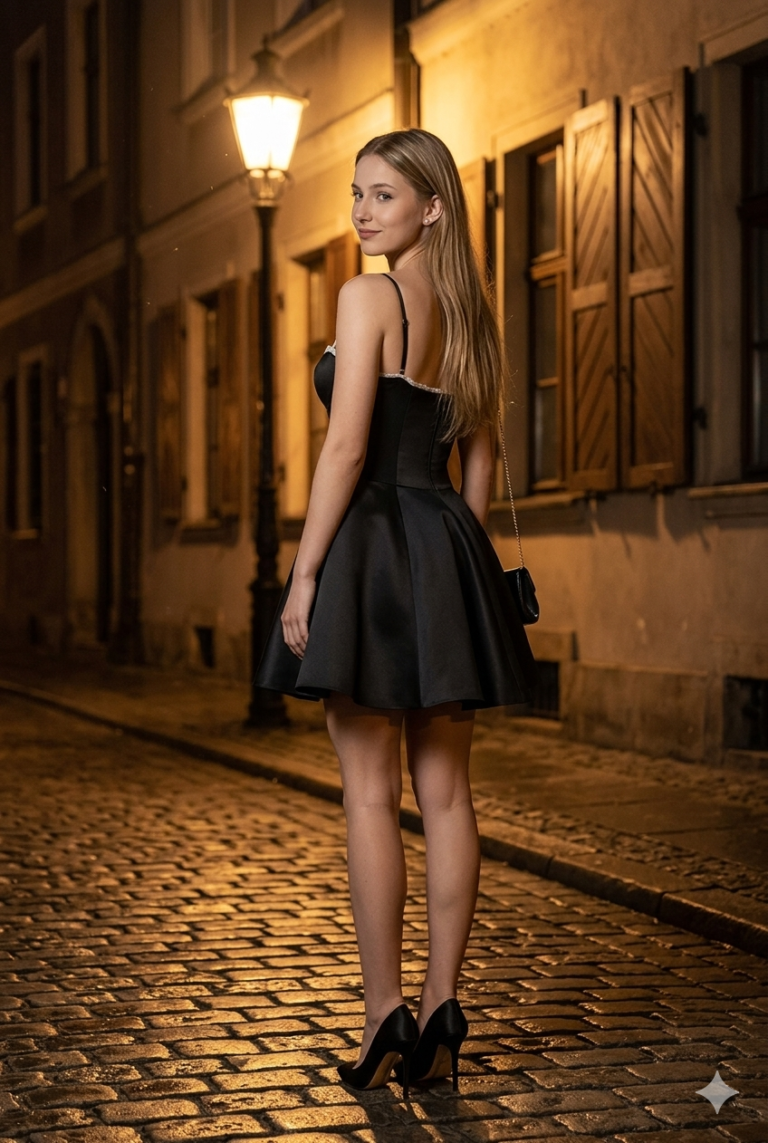
At the intermission of The Magic Flute, while hungrily wolfing down mushroom quiche and fizzy water, I noticed an attractive girl in a little black dress, above very long, good-looking legs, standing alone nearby. But Poland is full of tall good-looking girls—though rarely standing alone—and I didn’t really pay much attention.
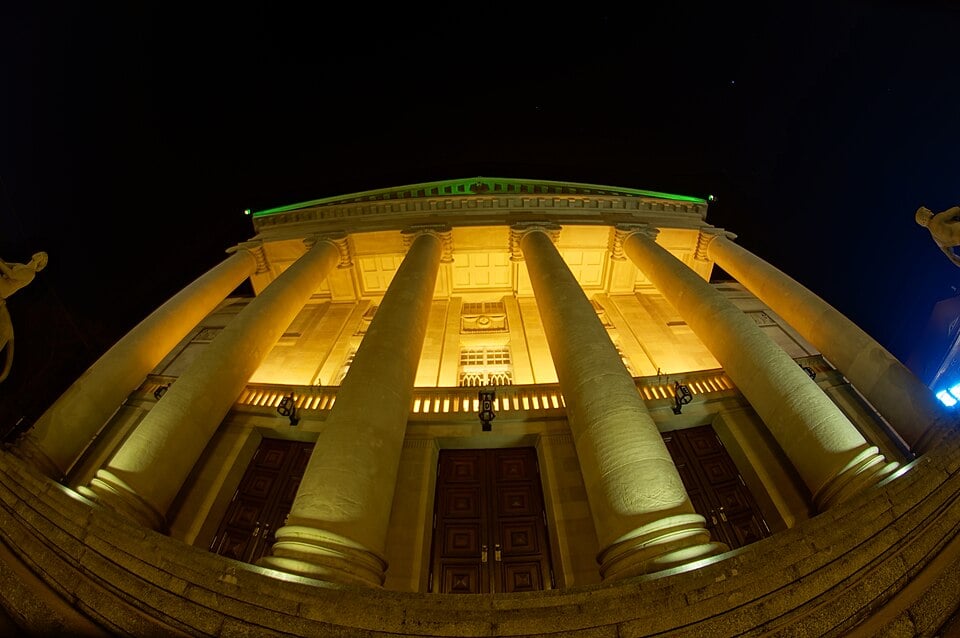
Teatr Wielki (Grand Theatre) Poznań.
Photo by Marcin Baliński.
During the first half of the opera, in the box where I’d been seated, the chair next to mine had been empty. As I took my place after the interval, I saw that the long-legged girl now occupied that seat.
Oh, this is unexpected, I thought and together, though in fact separately, we watched the rest of the opera. When it ended I turned to her and asked, “Did you enjoy it?”
“I liked the singing,” she answered thoughtfully. “I thought the orchestra was great, but I found the sets and costumes really weird and gloomy.”
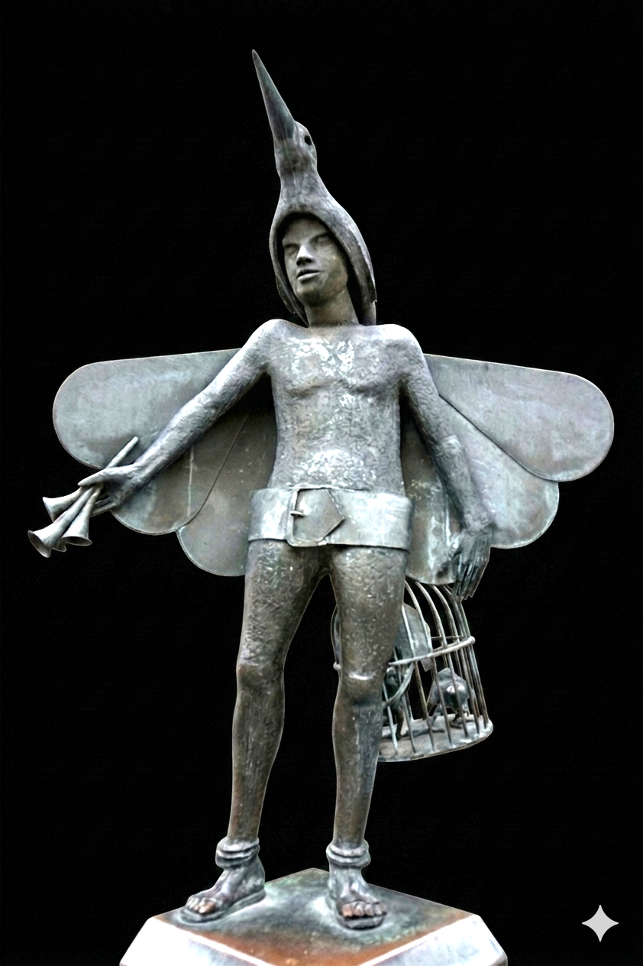
Statue of Papageno, ‘The Bird Seller,’ Bruges, Belgium. Photo by Dennis G. Jarvis.
[Black background by GeminiAi.]
That had been pretty much my assessment as well. As a rule, the little Poznań opera generally has one or two good singers in a cast. Everyone else is an also-ran. But last night, the singers playing Tamino, Pamina, Papageno, Sarastro, and several others, were first rate.
I agreed with her that the orchestra had also been spot on throughout. Sadly, the Queen of the Night was a bit shrill, though menacing enough; still, the famous aria was not the climax it can be. Nonetheless, the opera was fun, even thrilling in its way, as opera in such a small theatre in an out-of-the-way place can be. The audience was genuinely grateful and not feeling the jaded sense of entitlement that a big-city audience sometimes does.

Photo by Lance Reis. Model: Alyxandria Nicole
As we were preparing to leave I asked the long-legged girl her name.
“Zuzanna,” she said.
I told her mine and we shook hands perfunctorily. Poles are mostly terrible at this. Their handshakes are usually limp and formless.
Zuzanna asked where I was from and I got the standard look of delight and envy that people from San Francisco often receive. I asked her in turn and learned she hailed from Gdynia, the port city the Poles built next to Danzig to compete with it.
And then it was time to get our coats from the cloak room. I had my coat and was headed for the stairway to the street when I saw her and, again, she was standing alone.

Interior of the iconic Okrąglak building off Gwarna Street, Poznań, Poland.
Photo by Samuel Zeller.
“So, what are you doing now?” I asked.
“Do you mean right now, or now in general?”
“Right now.”
“Nothing really. I guess I’ll go home.”
Ever the gallant septuagenarian, I said, “Why not come along with me? I’m going to a nearby wine bar to have a glass of wine.”
“Is it far?” she asked cautiously.
“No, very close, on Gwarna.”
“I’ll walk with you and decide along the way.”
We ended up spending a very pleasant hour or so together, sitting at an outdoor table until rain began to fall. She drank white, I had red. Like all the barmen and barmaids at that place, the barman on duty, Miłosc (his name means ‘love’ in Polish), actually knows his stuff and makes informed suggestions.
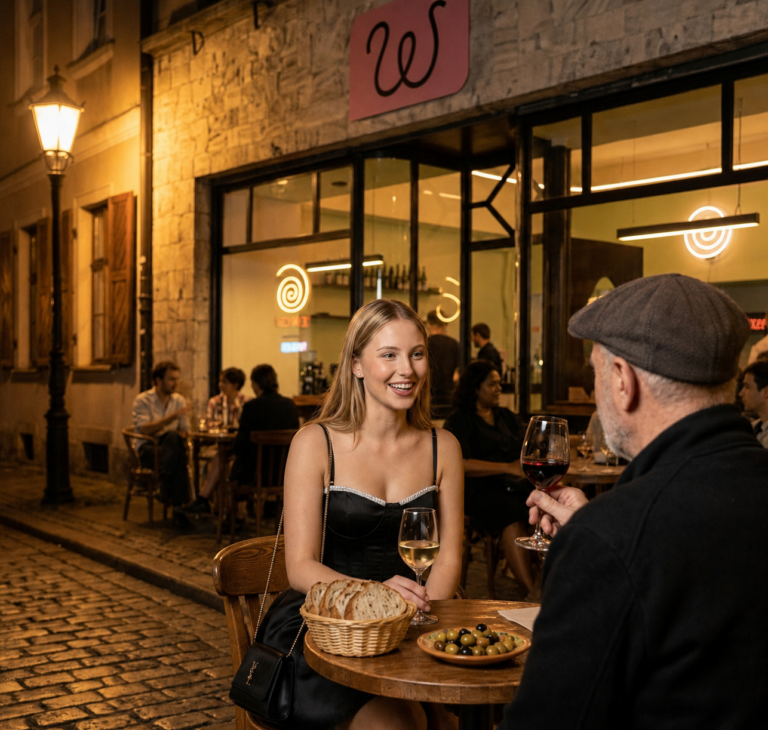
Image rendered by GeminiAi/ChatGPT.
The kitchen was closed, but they brought us sourdough bread with butter, course-grained salt, and green olives. She was, she said, in her second term at flight school, learning to fly jets. She wants to be a commercial pilot, a dream of hers she told me, since she was seven.
Poznań has a well-respected flight school, quite international because it is less expensive than other such schools. Many graduates become pilots and first officers for RyanAir.
I had only a vague idea of her age. I had no idea why she chose to spend her evening with an old man. “How old are you?” I eventually asked. She smiled a rather coquettish smile and said, “Eighteen.”
Eighteen? Oh shit, I thought.
But, inwardly, I was as happy as I’ve been in days.
About the Author
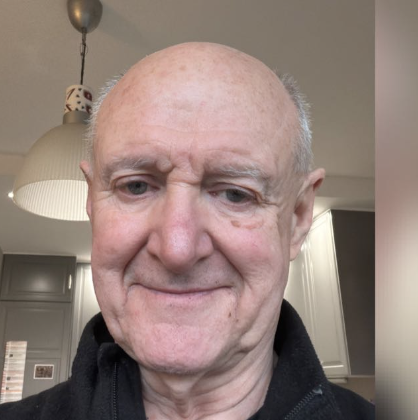
Andrew Hingston is an expatriate living and writing in Poznań, Poland. He volunteers in a kitchen making and carrot and potato soups for hungry locals; critiques music, food, and art; creates artisinal pizzas at home; and opines freely about life, politics, religion, philosophy, and all other human topics and endeavors to a select group of friends.