
But whenever early July comes around I find it useful to remember another declaration, one made years before and not by me. It was signed by fifty-six men who, for all practical purposes, came together, somewhat like a modern men’s team does: intent on causing greatness, and on creating a country with an entirely new ethos for success.
I say it’s useful because, unlike my own declaration, these men signed theirs knowing it would likely lead to their being hung, drawn, and quartered.
I just looked up that process and, unless you have an especially strong stomach, I recommend that you skip it. It was the most barbaric and painful death the British could devise and it was used — almost exclusively — to punish traitors. Signing instantly made all those guys traitors.
Yet, they signed anyway.
I wonder what a world — this world, our world — would be like if every man took his every oath as though death would be his lot if he broke it. Would any of us sign, knowing the price of failure or prevarication would be evisceration while still alive? Would we commit to things — being on time, fixing the roof, etc., under those conditions?
What if all we casual oath takers, and casual oath breakers, somehow managed to hold ourselves to our word. Every. Damn. Time?
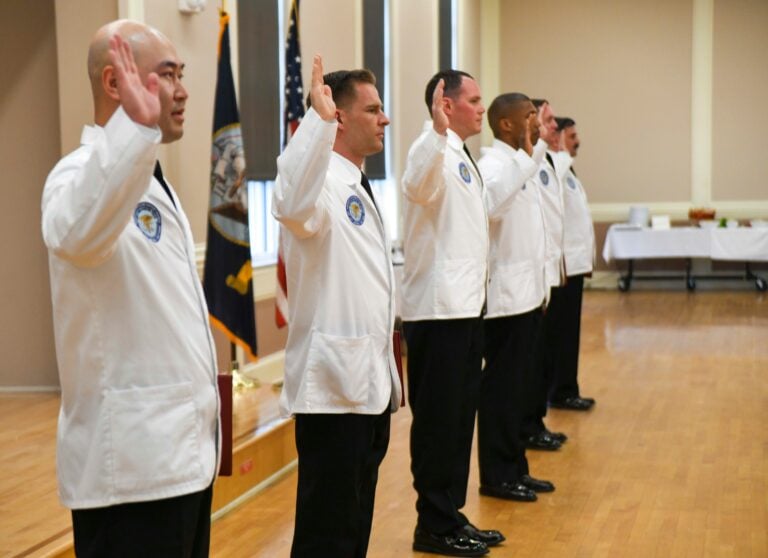
Photo by Navy Medicine.
I don’t know what all the results would be, but I do know this: a heck of a lot of sh*t would be getting done that isn’t getting done now, and an enormous load of shame would be avoided.
Yes, yes, and everyone would be slender and sport large muscles while booze and cigarettes went begging in the marketplace.
Is the trick to make our commitments as if our lives depended on keeping them? Is that feasible?
It worked for me in Iceland, and occasionally since. But all the time?
Ah, well. It’s worth thinking about. Every July, at any rate.
Dan Kempner, Executive Editor,
MDI Legacy Magazine
A Word on the Frontispiece
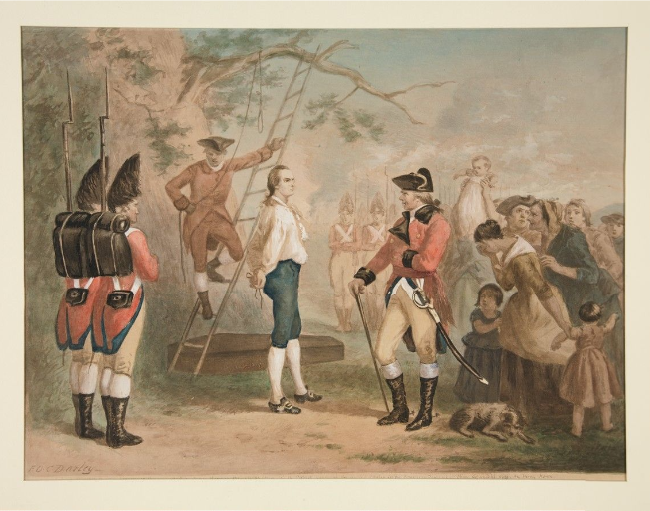
The Last Words Of Nathan Hale; The Hanging
Felix O. C. Darley. Pencil and watercolor on paper. (1858)