

My dad had a friend, back when I was a boy. They’d met years before and, though we heard of him often, dad’s friend Maynard was a sort of mythic figure because we rarely saw him.
Every few years we’d hear that Maynard was coming to town. I was excited as his visit approached for, whenever Maynard finally did arrive he’d fake-punch me, toss me in the air, and shout things like, “How you doin’, Tiger!?” He was great.
But, after a few days he’d depart, and that was that. None of my dad’s other friends came because, I finally realized, he didn’t have any.
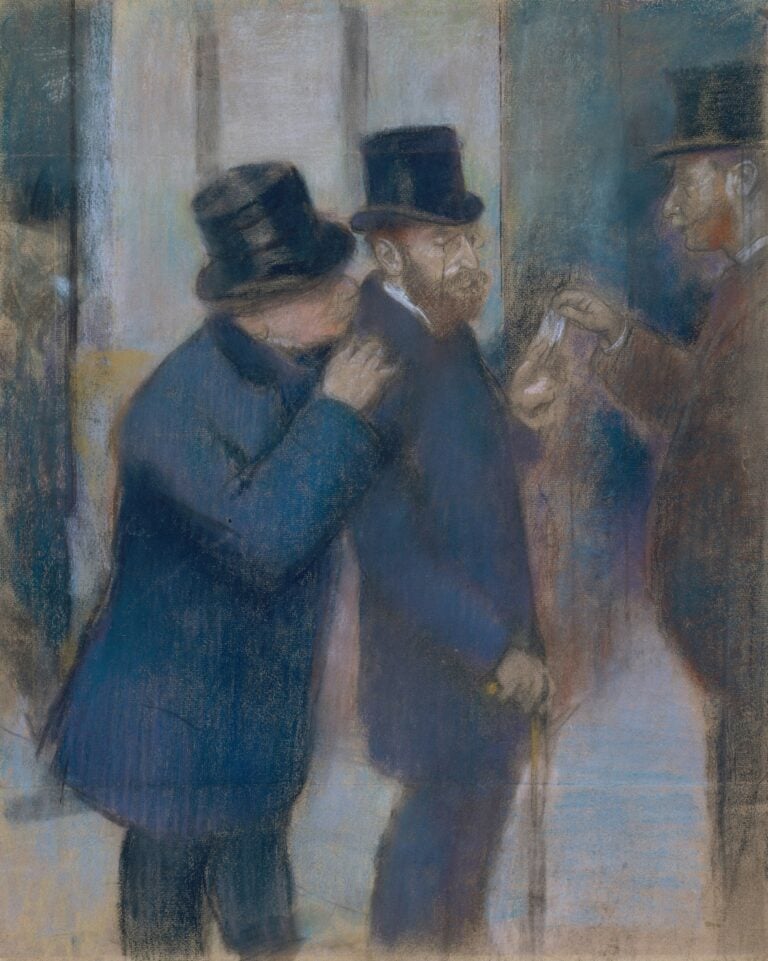
Edgar Degas, Portraits at the Stock Exchange.
Pastel on paper (circa 1878).
Mom, on the other hand, had an address book filled to the last margin with friends, colleagues, relatives, friends of friends, and she was constantly meeting them or writing them or talking to them on the phone, planning events and workshops and gatherings.
When my dad wanted to do something with others he’d say to her, “hey, why don’t you call one of your friends and we’ll go to that musical downtown?” or wherever.
Some years later mom got one of those fast-moving cancers. It was so far advanced when discovered that the oncologist said only, “go home and get your affairs in order.”
Dozens, hundreds, thousands it seemed, of her friends came out of the woodwork during her illness: cooking special foods, cleaning our house, helping finish her book, taking endless shifts at the hospital, and just generally acting like a small private army dedicated to preserving, or at least easing, her life.
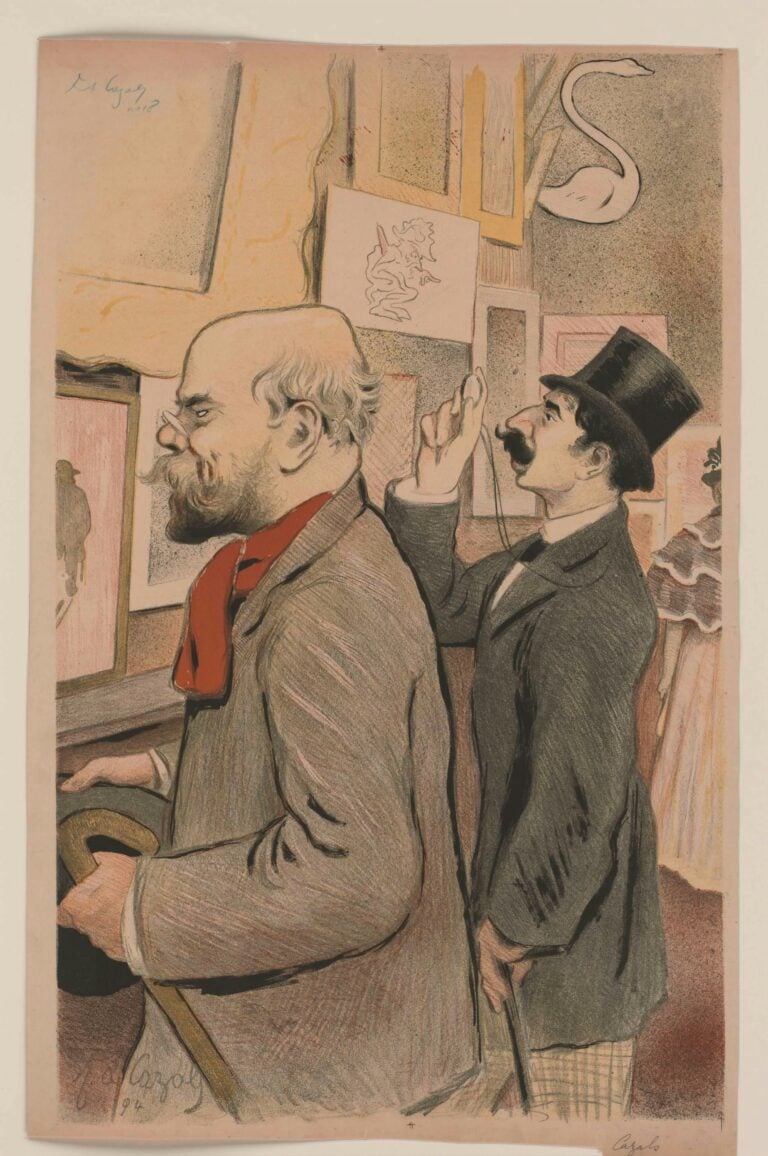
Frédéric-Auguste Cazals, 7ème Exposition du
Salon des Cent (7th Exhibition of the Salon des Cent),
Lithograph on paper (1894). [Note: the figure in the foreground
depicts French poet Paul Verlaine.]
My dad was heroic during the few short months before she died, never wavering, never losing it, supporting my sister and I, who though adults already had never yet lost a parent. But none of his friends came to help him because, in truth, he had none.
Her memorial service was packed, thronged, overflowing with her friends and some of mine. There were relatives from far away and even some of her nurses from the hospital showed up in tears. Yet, none of my dad’s friends were there: there weren’t any. He’d forgotten how to make them and, while mom was alive, hadn’t seen the need.
I waited anxiously, after all the hoopla died down, to see what he would do. He had, it seemed to me, only two options: to shrivel up and die — which seemed the likeliest course — or to figure out some way, some method, some strategy, for getting friends of his own into his life.
The odd thing was, my dad was interesting. He was engaging, and not at all shy. He was a good storyteller too, had a marvelous laugh, and could declaim on many fascinating subjects.
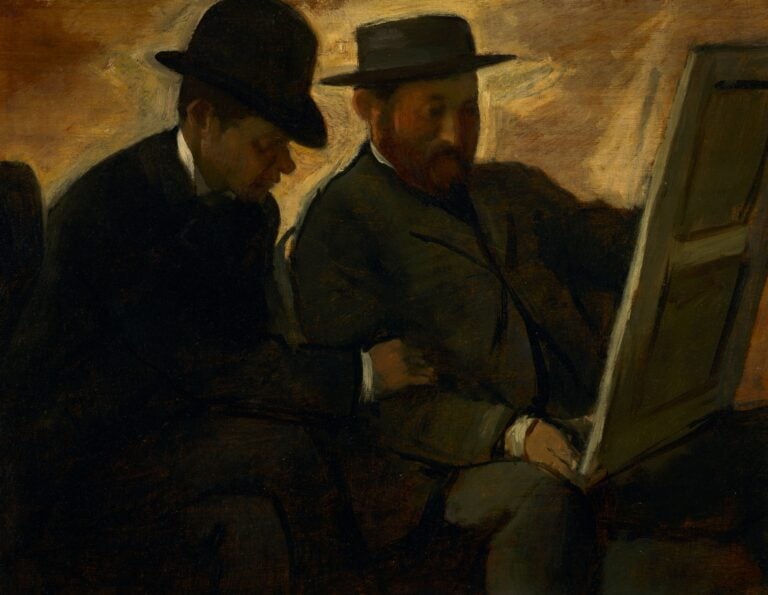
Edgar Degas, Paul Lafond and Alphonse Cherfils
Examining a Painting. Oil on wood (circa 1878)
He was a worshiper of art and architecture, for example, and a voracious reader of biography and memoir and consumed something like six biographies a week. There were few films whose actors, plots, staging, lighting, and cinematography he could not discuss intelligently. And of course he was a lifelong — and therefore long-suffering — White Sox fan.
Nonetheless, I was afraid no one else would have the benefit of all this knowledge and personality but me. I was so worried, in fact, that rather than returning to Boston, I stayed with him in southern New Jersey, just to be his companion, to help him adjust.
But then, one day, without any fanfare, he got out his old, slender address book and started calling people he knew from the local university; from the local art galleries he frequented; or someone he’d met at the chiropractor. Next came mom’s fat phone book and he called some of her friends.
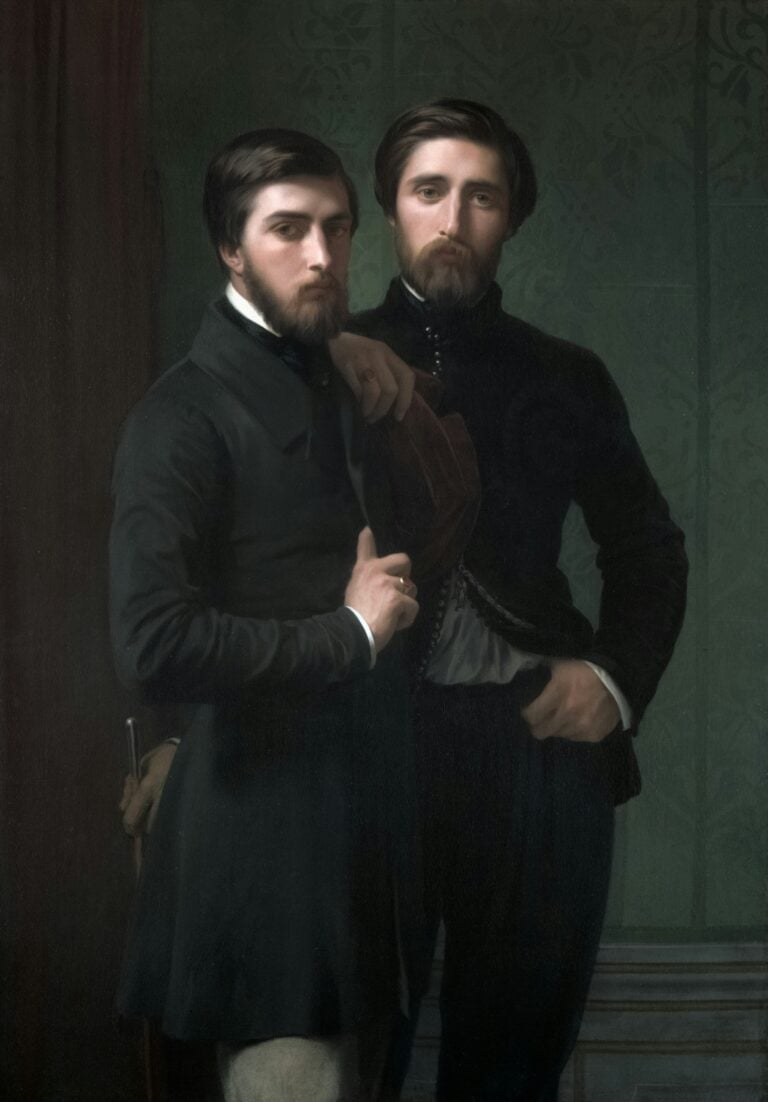
Hippolyte Jean Flandrin, René-Charles Dassy and
his Brother Jean-Baptiste-Claude-Amédé Dassy.
Oil on canvas (1850).
He had some dinners. He went to some library shows and galleries, and slowly began to form bonds and have some company. There was, after all, no magic to it.
But there were also no tricks or shortcuts. He realized, I think, that the way to make connections was, simply, to connect.
Dan Kempner is the Executive Editor of MDI Legacy Magazine.
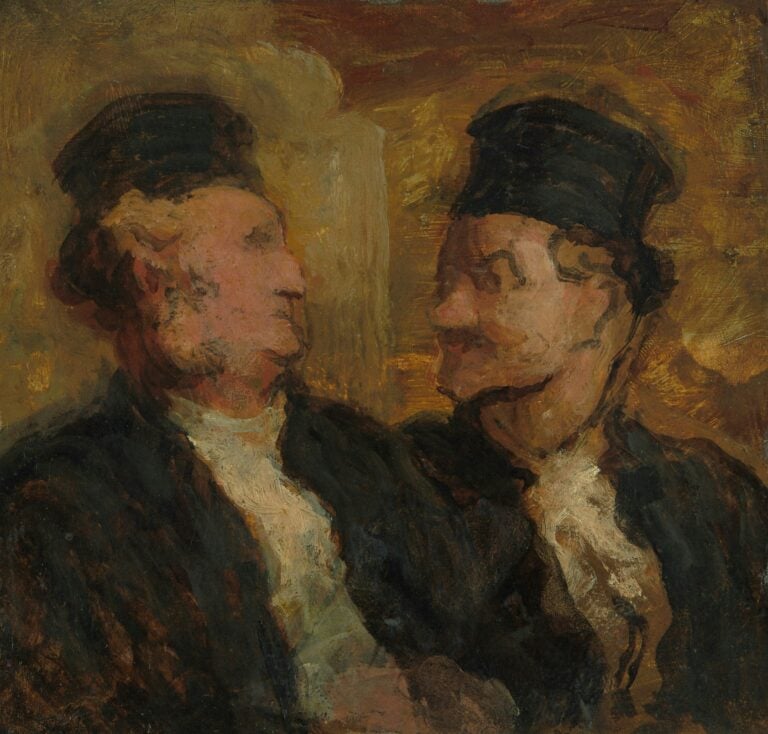
A Word on the Frontispiece:
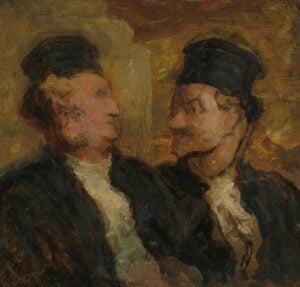
Honoré-Victorin Daumier,
Two Lawyers. Oil on woode (circa 1860)