
First: these are only suggestions. Rules are meant to be broken and the best journeys are off road with no GPS.
“If you have a problem and you can solve it, then solve it. But don’t worry. If you have a problem and you cannot solve it, then don’t solve it. But don’t worry.”
— Śhāntideva (8th Century Buddhist Monk)
Things to Think About the Night Before the Meeting . . .
What is a team? Why am I here? Why are the rest of the men here?
What do I know about my teammates? What don’t I know about my teammates?
Who is the best “mentor” on my team? Who’s the best “discoverer,” best “inspirer,” or the funniest man on my team?
How can I make use of these appraisals to make the meeting the best it can be? How can I be unpredictable? How can I get the men fired up? How can I make the men feel safe even when I ask them to stretch themselves into pretzels?
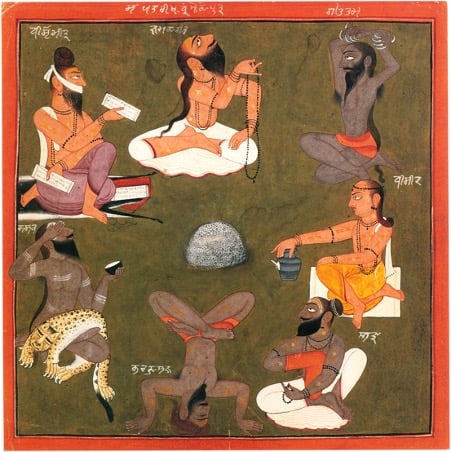
The closest thing to a 16th-century men’s meeting.
A variation of the Saptarishi (Seven Sages). Watercolor on paper. Artist unknown (c. 1700)
The answers to these questions are not as important as the questions themselves . . .
Ask for help. Ask someone who has done it before and it doesn’t have to be a teammate.
Don’t follow that person’s advice if you think he’s full of shit. Maybe, don’t follow his advice even if you think he’s a genius. Be your own man.
What can possibly go wrong? Don’t be afraid to find out — it won’t kill you or your team.
Q: How to make God laugh? A: Make a plan.
On the other hand, don’t make a plan and get squashed like a bug….
Your choice; always your choice.
Things to Consider for the Meeting Itself….
Remember always, it’s your meeting to lead. Choose your style with care. Consensus builder? Dictator? Kindergarten teacher? Drill sergeant? Japanese businessman? Elon Musk? Mom? Dad? Gandhi? Clint? Curly?
You could be Don Corleone or Don Rickles. Robin Williams, maybe? The fourteenth Dalai Lama, perhaps? The font of all wisdom? How about George Washington? George Patton? George Marshall? George Orwell, maybe, or even Curious George.
You can have more than one style, and they need not be consistent.
Do a CPR or wing it? Do a CPR and then wing it? (Q: How to make God laugh? A: Make a plan. On the other hand, don’t make a plan and get squashed like a bug…. Your choice; always your choice.)
Ask a man to explain confidentiality. What it is and why it’s important in order to do what we do. Why. Why. Why. Mudroom? Do we need it? Really? Up to you.
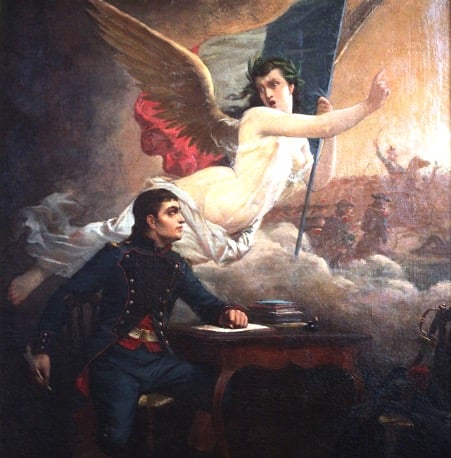
‘Rouget de l’Isle composant la Marseillaise’ [Rouget de l’Isle composing the Marseillaise.]
Auguste de Pinelli, Oil on canvas (1875)(Cropped).
Recite the team standards? Recite the Code of Honor? Sing the Marseillaise? Sing the Battle Hymn of the Republic? Get up and shake your booty for thirty seconds? Show us your ass? Smoke a cigar? Light a candle?
Ask the men off-the-wall questions to throw them off balance. Be specific.
Don’t be afraid to go deep with a man who needs it. (It’s why he’s here, even if he doesn’t know it.)
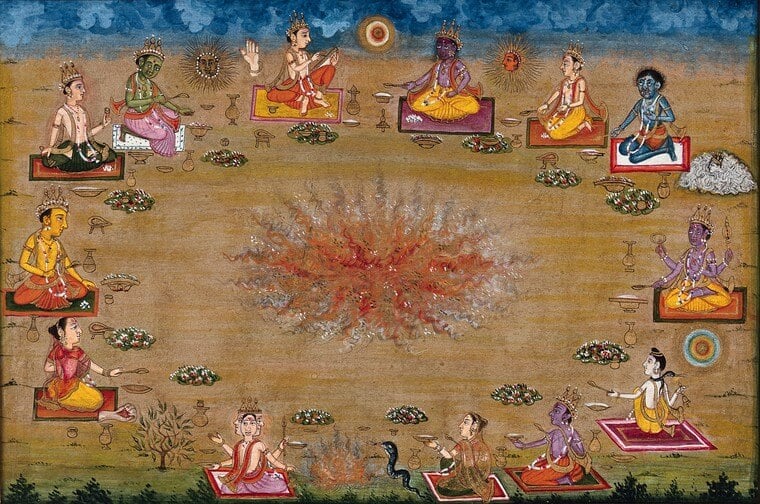
Thirteen deities performing a Yagna (fire sacrifice). Indian miniature painting, gouache on paper. Artist unknown. Wellcome Collection, London.
Circle Time. Know how to introduce it briskly and precisely.
“I think we all know how this works….” is lame. Makes it sound like a proctology exam and that’s not how it should feel.
Goals. The why is more important than the what. Each man has his own reasons. Listen to each man’s reasons.
Fun! Always a toughy for this team. Be demanding. Score the result. How was that fun on a 1-10 scale? A ’10’ equals laughing aloud. A ‘1’ equals projectile vomiting.
Get someone to explain our chant-out. Then, chant out. Then, do it all again next week; but make it new each time.
And if it all goes to hell, well, as Śhāntideva once noted,
If there is a remedy, then what is the use of frustration? If there is no remedy, then what is the use of frustration?
About the Author
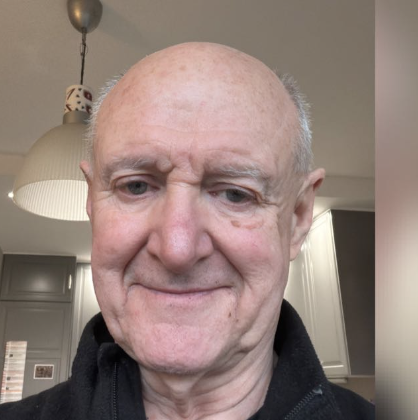
Andrew Hingston lives, writes, volunteers in soup kitchens, and opines on human endeavors large and small, in Poznań, Poland. He is an avid creator of artisinal pizzas and is, due to geography, a member of MDI’s online region, Atlas.
A Note on the Frontispiece
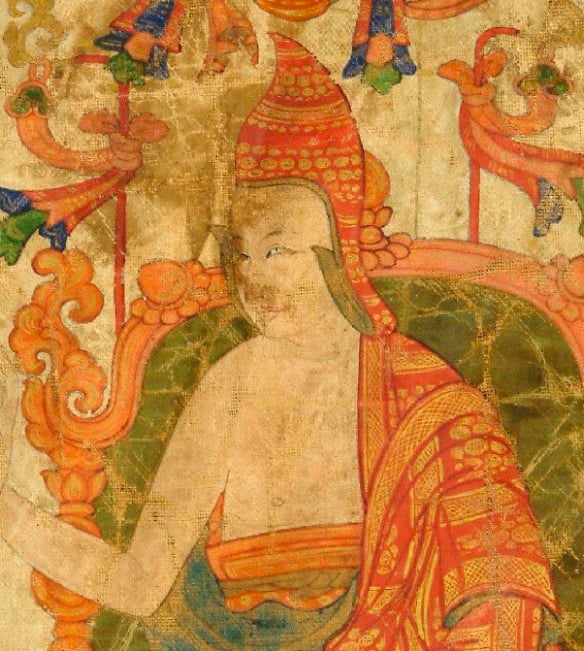
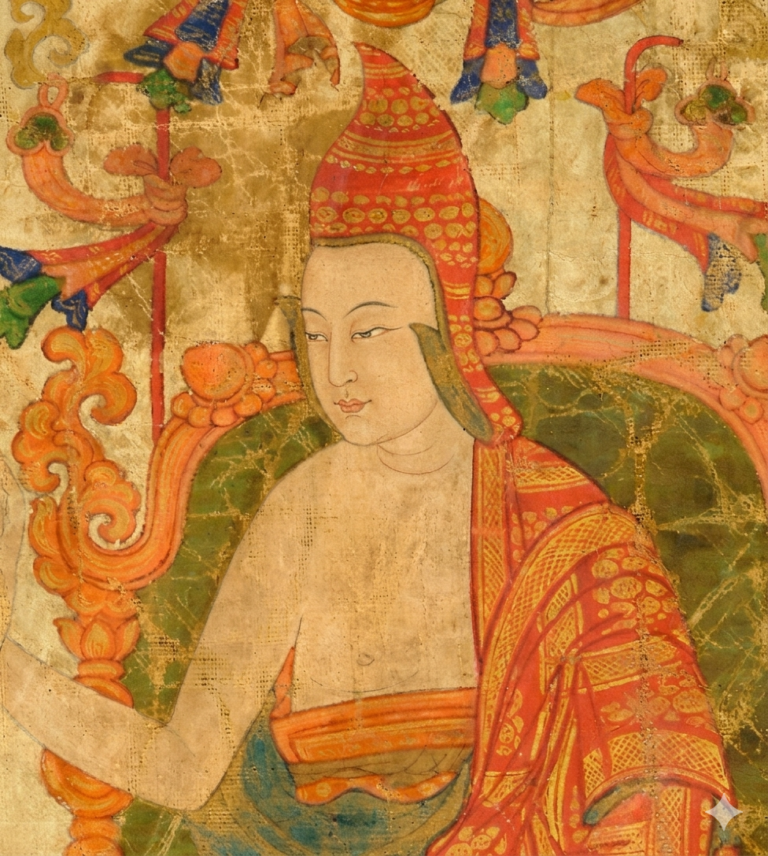
A 19th century painted image of the east Indian Buddhist monk and poet Śhāntideva. Artist unknown.
For purposes of this article, some discoloration in the image (above) was removed by GeminiAi.