
Burnsie... In The House!
PART I: Separation
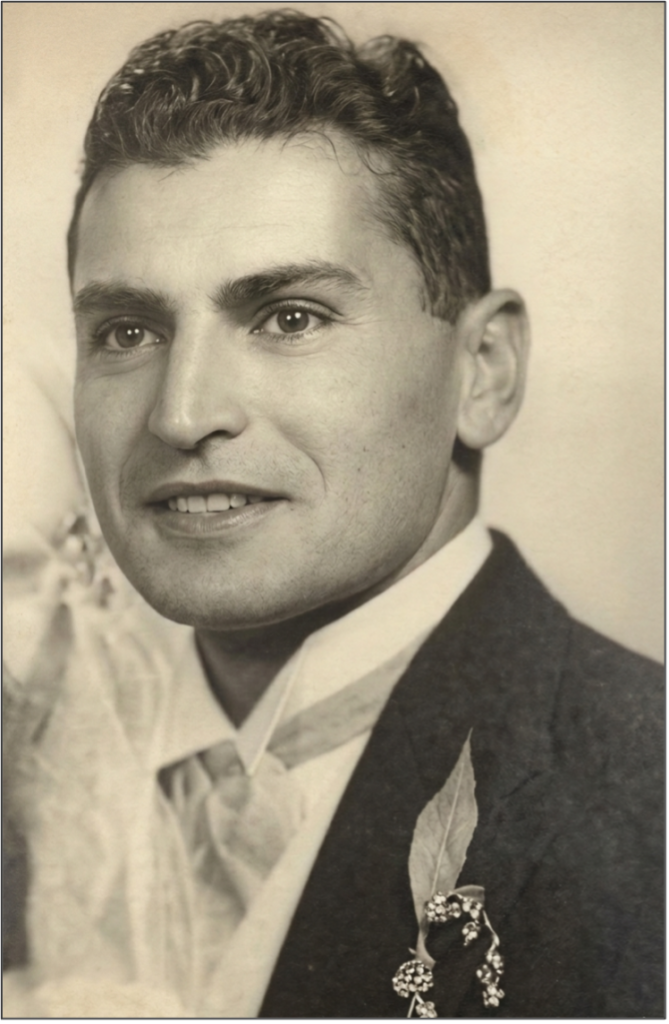
Chaim “Henry Burns” Bernstein, New York City.
Date and photographer unknown.
[Note: image altered for graininess by geminiAi]
My parents were born orthodox Jews. But I didn’t know that. I wasn’t told. They never said, “by the way, we’re Jews, Michael,” and they didn’t do or say anything else: there was absolutely nothing in our family lifestyle that evidenced that. Saying our family was ‘assimilated’ is a huge understatement.
Given that my dad’s original name was Chaim Bernstein, it is remarkable indeed that I never knew. But that was in 1916. By the time I came along he was plain old Henry Burns and I had no reason to question that.
Yet, not only was I raised without a Jewish identity, my parents never replaced it. I was not handed any identity by my parents and it never occurred to me that I might need one.
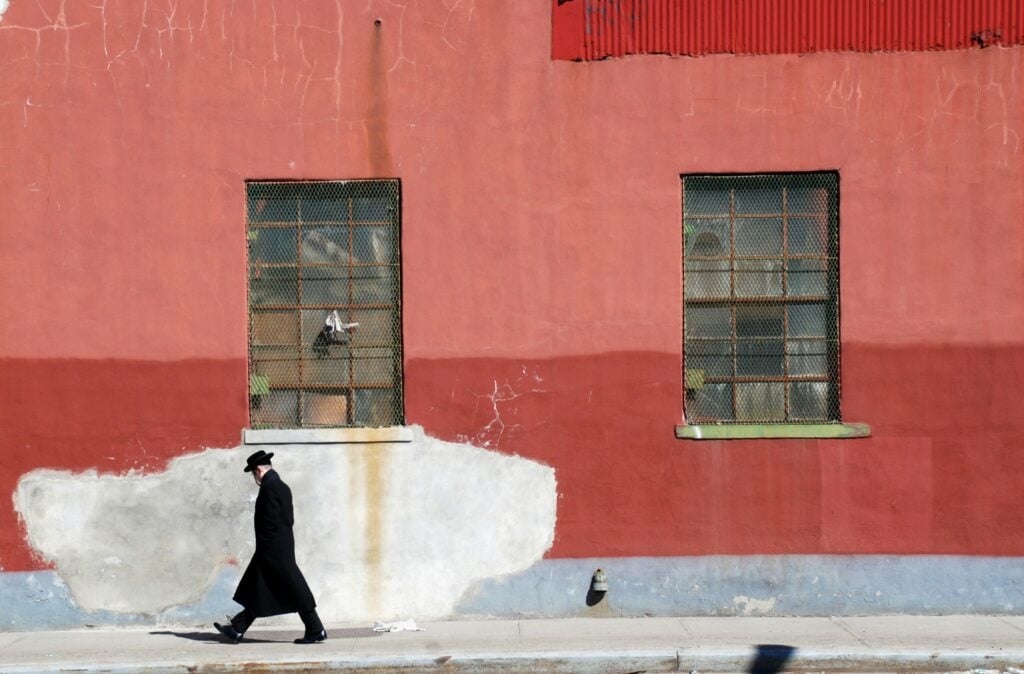
A young Hassidic Jew in Brooklyn, New York. Photo by Carmine Savarese / Unsplash
The choice—to be a Jew or not—was available to my dad. It was not available to me—at least, not then. When Chaim Bernstein cast off his name he also cast away all attachment to religious Judaism and even the cultural traditions. He freed himself of an external identity that was not of his choosing, and built an identity from the inside out. Eventually, like everyone, I had to do the same. The question was; would my choice bring me back to Henry’s roots or would I, as he did, find roots of my own?
When my father was 12 his own dad died and, to follow the Judaic rule for mourning, he had to pay street people to come into the synagogue in order to gather the required minyan[1] of ten adult males. That, according to my dad, was the straw that ended any connection to, or interest in, being religious for young Chaim.
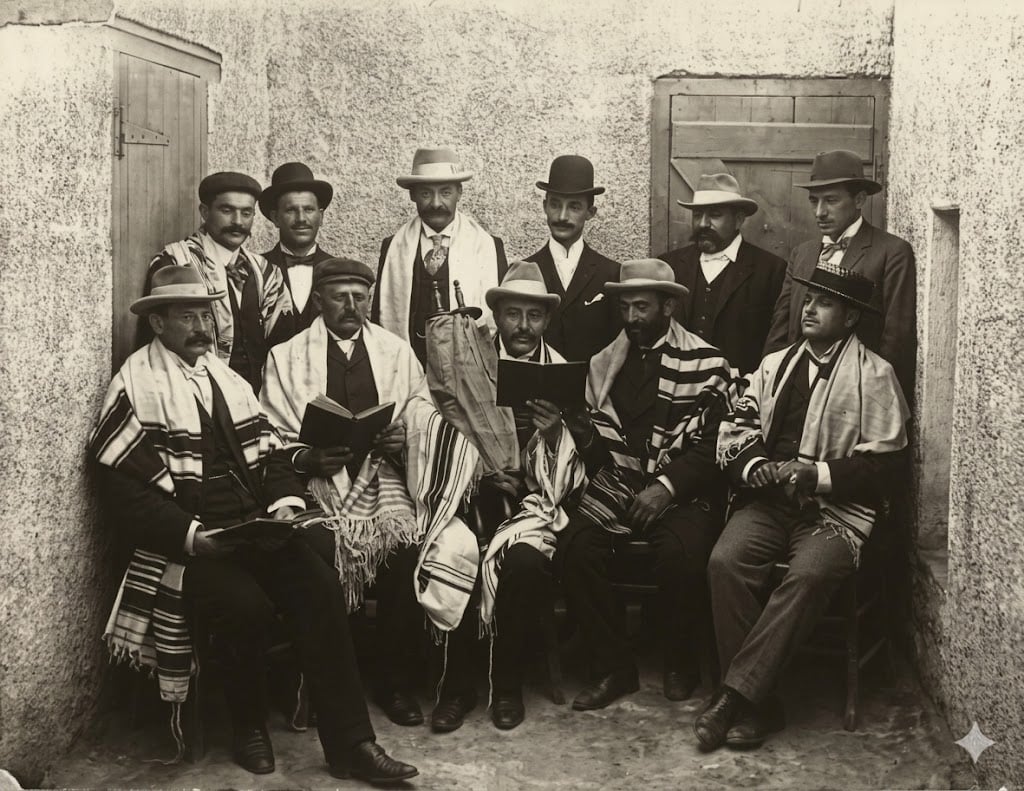
Durban, South Africa (1900). A minyan gathered for Yom Kippur, the Day of Atonement,
holiest day in the Jewish calendar. Photographer unknown.
[Note: this image was enhanced for graininess by GeminiAi -Ed.]
At an early age, Dad had created a very practical, logical life philosophy to deal with his circumstances, and to build a successful masculine identity in a time of global anti-semitism and economic depression. His experiences in New York during the ‘20s and ‘30s when prejudice was rampant showed him that, if he was identified as a Jew, the road to material and physical success would be hampered.
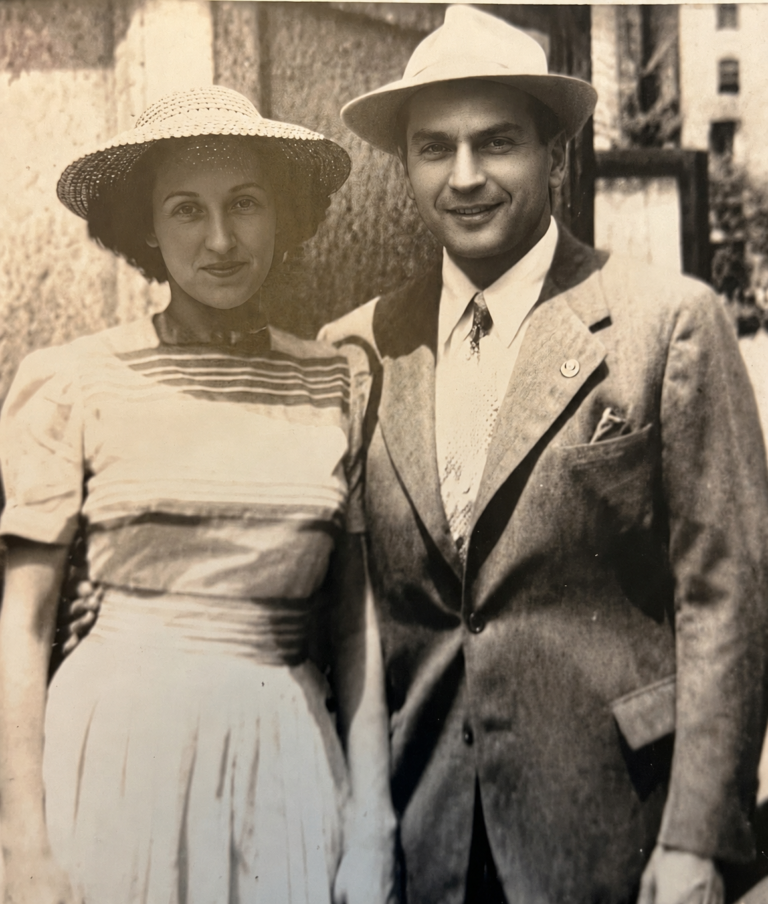
Gertrude “Rusty” Burns with Henry Burns. Date and Photographer unknown.
[Note: this vintage image has been enhanced for clarity and graininess by GeminiAi]
Mom was born Gertrude “Rusty” Ross in Willmington, Delaware, and she also faced anti semitism in her neighborhood and schools. She had difficulty getting hired when seeking work as Gertrude Bernstein so the couple decided to change their name to Burns. She got work and, down the road, dad was hired as veterinarian to the Crown Colony of the Bahamas, as the British then called it.
“The man who hired me,” he told us, “said, ‘I can smell a Jew a mile away.’”
They were now on the fringes of the Nazi-sympathizing Duke and Duchess of Windsors’ social circle. The Duke and Duchess—the former King Edward VIII and Wallis Simpson, the divorcée he’d abdicated the throne to marry, outspoken anti-semites both—were governing that colony[2] just as the holocaust was unfolding.
I, on the other hand, apparently could not smell a Jew, even at close quarters. In my pre-teen years, the Burns family went back east to visit my parents’ siblings. Jewish uncles and aunts. Jewish food at Jewish meals. Jewish tchotchkes (trinkets), breakfasts of lox and bagels. But even the dead giveaway, the menorahs, didn’t make the bulb light up. Dad’s brothers, named Bernstein? Still nothing. A few times growing up, my peers—who somehow knew my origins even when I did not— called me Jew and Kike. I didn’t know what those words meant, but it hurt just the same.
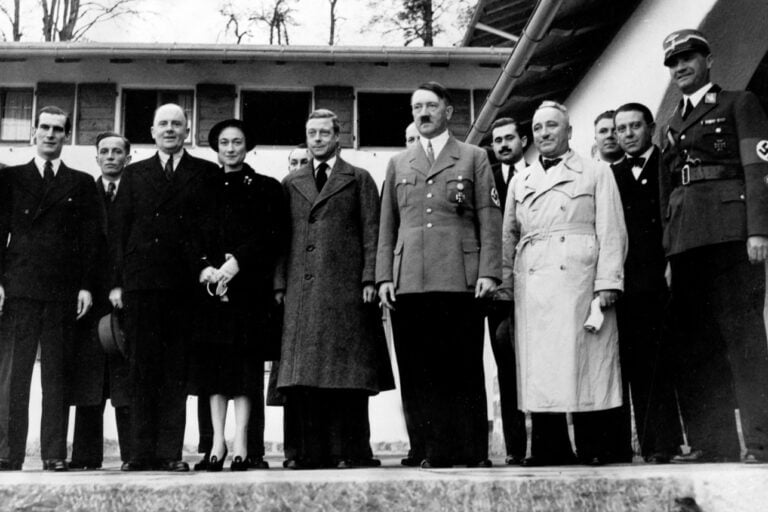
Edward, Duke of Windsor and Wallis Simpson, Duchess of Windsor with Adolph Hitler
at his Berghof estate, Bavaria, October 22, 1937. Photographer unknown.
It wasn’t until my college years that I began to suspect and to become interested in piecing together my missing identity.
I had a roommate who talked about his family life as a Jew. Whenever I wasn’t smoking dope—a rarity—I shared with him some of the clues to my lineage that I’d gathered during that family visit and other breadcrumbs that had come to light.
He helped me put together the puzzle, to realize I was born of Jewish blood. I had watched Alex Haley’s ROOTS on TV, the story of a Black slave discovering his free, African identity, and that made me wonder if my own identity could be discovered by exploring my Jewish roots.
It’s possible that impacted the choice of my first wife, Sally, and her choice as well. Though herself a gentile, she had a strong affinity for Judaism and for Israel. I, the actual Jew, knew nothing about either one.
Some of Sally’s friends were Jewish, including one young man she idolized. I don’t know if he was an actual Zionist, but he was strongly pro-Israel and this affected Sally very much. Did she intuitively sense that I was a Jew? Did I intuitively sense that she would guide me closer to my roots?
For our honeymoon, in 1973, we made our way to Israel, to Ha Eretz, the Land.
But hot and humid is all Israel was to me when we first landed.
We wanted to live and volunteer on a rural commune so we went to an agency that would place us on a kibbutz. “Somewhere not hot and not humid” was my only requirement.
And my requirement was met: we were sent to the lush, cooler mountains in the north, between Haifa and the Sea of Galilee. It was still hot but the humidity was deliciously low.
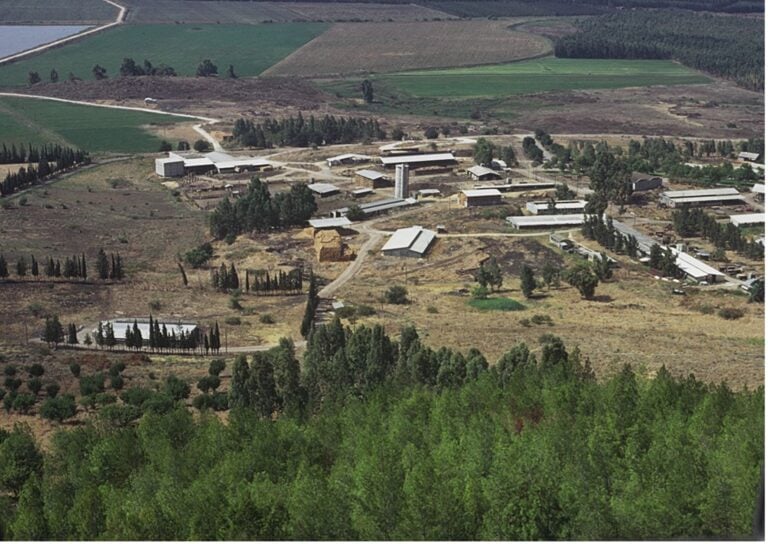
Kibbutz Parod in 1960. Photo by Ronnie Kenigsberg, Pikiwiki, Israel.
This kibbutz was founded after WWII by Hungarian immigrants who, though they were not religious, were moderately observant of traditions and totally identified as Jews.
What a life! Beautiful geography with stunning views of both the Sea of Galilee to the southeast; and the Golan Heights to the northeast. Sharp blue sky above, the green-grey leaves of the olive trees below.
I worked as a lifeguard; as a yard man who drove around in a tractor, taking food to the milk cows; and handing birds from the huge chicken houses to the packers on trucks. I picked, packed, and stored apples, too, while Sally worked with children. We also got to be part of an Ulpan, an immersion course for learning Hebrew. It was wonderful.
We lived this way for a couple of months but, of course, it didn’t last: the Yom Kippur War broke out. Israel was attacked, on its holiest of days, mainly by Syrian, Egyptian, and Moroccan forces with support from several of their Arab neighbors.
We saw Israeli fighter jets zooming low over the mountains en route to the Golan Heights where they bombed the shit out of the Syrians.
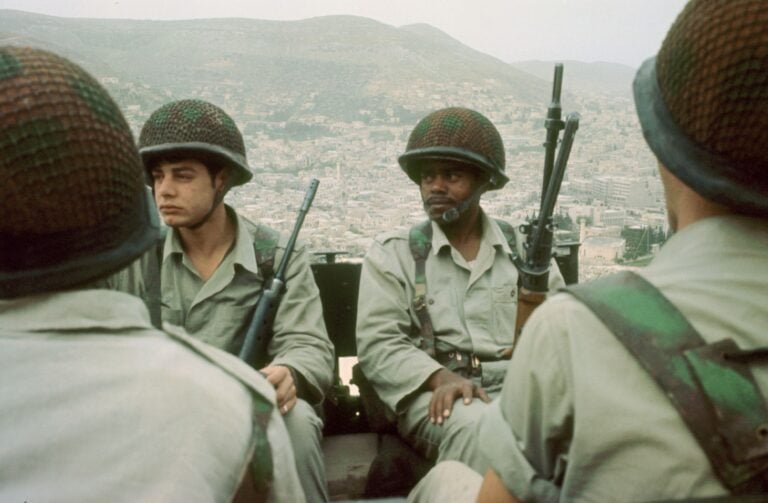
Israeli Defense Force (IDF) soldiers during the Yom Kippur war, October 11, 1973.
Photo by Israeli Press and Photo Agency (APPA).
All able young men and women suddenly left the kibbutz for military action and our volunteer roles were heightened. Rotating night-watch duty was added, though we had no guns and were buddied with kibbutzniks. None of the Arab armies entered Israeli territory during the twenty days the war lasted, so I never felt threatened, in danger, or even angry.
This lack of either emotional or intellectual engagement in this historic life event—and in this existential moment for the Jewish nation—was a clear reflection of my mind-set as ‘young Mike Burns, non-identified Jew.’ I see the memories of my youth from a detached, uninvolved distance, at a remove from all feelings. These dulled perceptions were reinforced by the constant use of pot since college. The weed supported my need to keep feelings I couldn’t understand or deal with at a distance.
Photo by Jaroslav Devia / Unsplash
Toward the end of the war, and it lasted only twenty days, there was a small measles outbreak among the kibbutzniks—members of the community. When Sally told me she thought it was possible she was pregnant, we were advised to leave temporarily, for the protection of the possible fetus.
There was a cease-fire agreement in place, so we rented a car and toured the country. It was odd: the land was utterly devoid of tourists. The only people on the roads were troop convoys and soldiers hitchhiking home on leave. It was an amazing way to see Ha Eretz.
For better or worse, there was no baby and, with the war now over, we returned to the kibbutz. I felt no pull to stay in Israel, and realized it was time to get myself a career. My parents had not modeled Judaism but they had acted as role models for living a successful life: marry, work, buy a house, and have children. So we decided to return to California and I began to study for a career; it looked very much like I’d be following blindly along my parents’ path without, despite my first foray to the Jewish homeland, finding an identity that truly fit.
But then everything changed. I had a head-on car accident that, I was told, took me to the brink of death. Aside from various broken bones, the concussion threw me into a coma for a week.
When I regained consciousness I was again very spaced out—my normal pot-head state of being—and it took three weeks to get out of there. I have no memory of the accident but I do remember conversations with my wife, family, and friends in which I spoke my thoughts spontaneously, like I no longer had an editor in my brain screening the inappropriate or unacceptable. It was truly a rebirth.
I knew my name, Mike Burns, but that didn’t explain who I was. Mike Burns was a clean slate, like an amnesiac. I was no longer guided by social mores, foggy head, insulated feelings, disinterested mind set: the self-induced amnesia was over. This new guy wanted to know who the hell he was.
But of course, Sally hadn’t forgotten anything. She was there, only 23, waiting, and seeing a new man emerge, one whose top priority was no longer her or our marriage. The accident had dissolved my commitment to our marriage and the marriage itself, naturally, dissolved soon after.
She had steered me toward Judaism and Israel, and now I felt drawn to both once again. Could my identity be there, waiting for me to show up and inhabit it? Being single now, and free to find my roots, I wanted to go and find out.
I changed my career trajectory to International Relationships, taking classes at a private grad school in Monterey. Talking with a classmate, it came up that I wanted to specialize in Middle Eastern Affairs and the idea came: why not go to school in Israel? Bon Voyage!
PART II: Reconciliation
Going back to Israel was not only to pursue graduate studies but, more importantly, to discover if my identity was to be found in my Jewish roots. If it was, I needed to learn Hebrew, so studying six days a week for six months in an ulpan, was the way to go. Since a potential new citizen in the eyes of Israel is entitled to certain perks, I got a visa as a temporary resident. The perk I wanted to use was going to an ulpan that was held at an absorption center.
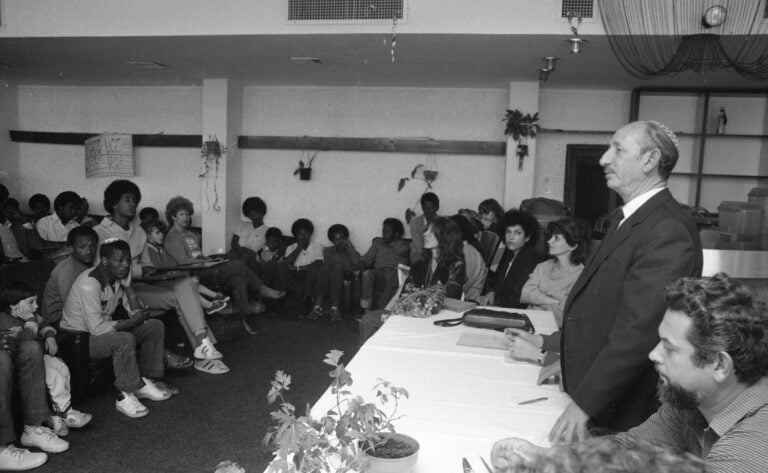
A member of the Israeli Knesset addresses Ethiopian immigrants at an absorption center
in Natanya, Israel. Photo by Israeli Press Photo Agency (IPPA).
National Library of Israel Collection
Absorption centers are designed to assimilate new, and potentially new, citizens into the fabric of Israeli society, along with learning the language. The one I chose was in the village of Kfar Saba, between Tel Aviv and Jerusalem.
The people assigned to this particular center were mostly professionals and academics. Opening day was like a UN assembly. The greeting was delivered in Hebrew, English, Russian, Spanish, and French!
While there, many of the villagers extended their hospitality by inviting us to visit their families on Shabbat,[4] to have meals, attend services at their synagogues and experience Jewish family life. I took full advantage of this as it gave me my first exposure to Judaism as people actually live it. My favorite village family offered a view into both the religion and the orthodox traditions that steered their lives. It was serendipidous that I was now living pieces of the life Dad lived as a boy, the life my sisters and I hadn’t even known about much less experienced.
Six glorious months of being fed, housed, and taught. Still recovering from the divorce, I was now getting healthy, enjoying international socializing and getting to know Judaism—and myself— better.
At the same time, some of the rituals of Judaism, and the hard-and-fast regimen of an observant Jewish life, made it very clear at last: I did not want that.
After all the searching, the groping, even the inchoate, dope-filled yearning had led me not to Dad’s roots but to my own. I had discovered that I agreed with Dad as I knew him. I don’t identify as a Jew, but as me: as I think, speak, and do. The journey for my roots was over and I no longer questioned whether or not my identity was tied to being a Jew. At last I knew: I have always been who I am.
PART III: Reunification
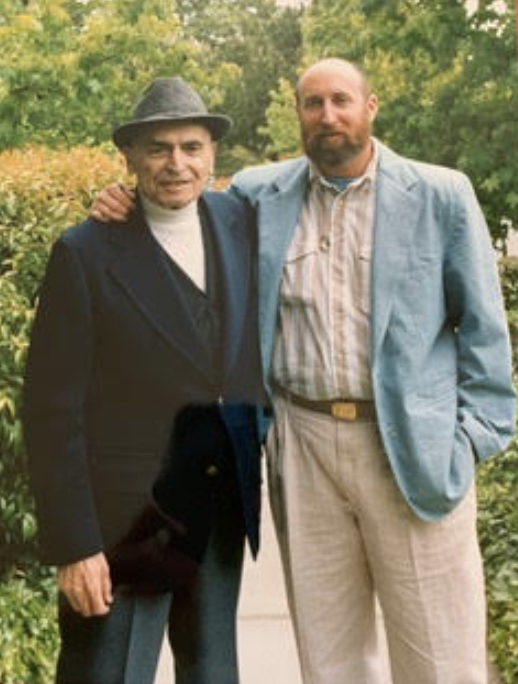
Henry Burns (left) and Michael Burns (right).
I had suggested to Mom and Dad that they come visit me, and the country, at the completion of my stay. I thought it could be something special for them—to experience a facet of being a Jew that they had never lived. But just as important, I wanted them to experience me as I had never been before.
And they came! They came for about ten days. We hired a tour guide to take us around most of the country: to see the land, learn some history, and get a hands-on feel for what the tiny land of Israel was up against. It was, after all, still surrounded by huge and wealthy Arab countries which had vowed to drive the Jews into the sea.
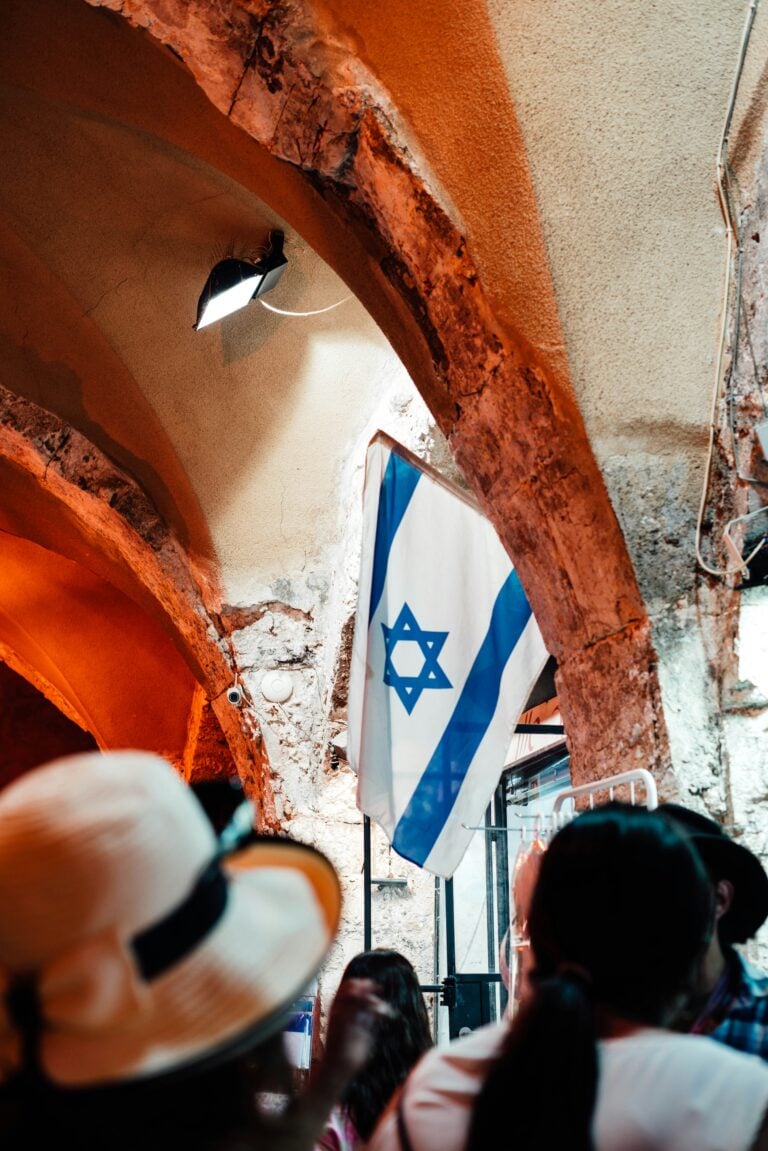
A structure in Israel. It’s a long way from Delancey Street.
Photo by Virginia Portillo / Unsplash
In retrospect, I think I wanted Mom and Dad to reconnect with their roots, with their own legacy and heritage. I had come from a place of having no connection to those roots and traditions and here I was, hosting them in our Jewish homeland.
Both Dad and Mom were deeply fulfilled and rewarded by their re-immersion into living as Jews, and to finally doing so openly. They were even more elated to witness their only son embracing the philosophy they used in raising me: that who I am was not defined by a label, but by how I lived my life, how I showed up. It thrilled them that, as they had so consciously done decades earlier, I was fully living the identity I’d discovered, one I had created for myself.
The circle was, at long last, complete.
References:
[1] The Jewish practice of minyan (count), from Genesis 18:32, Abraham’s discussion with the Hebrew God regarding the number of ‘righteous’ men needed to prevent Sodom’s destruction.
Ten was that minimum, therefore a quorum of ten men over the age of 13 is required for certain Jewish prayers to be said. Since the funeral prayers must be said, and ten men are required, men are sometimes recruited on the street for pay.
[2] Edward, Prince of Wales, was appointed governor of the Bahamas, 1940-1945.
[3] At the time in question, the fledgling State of Israel was only 25 years old and it’s continued existence was very much in doubt.
[4] Saturday, the Jewish day of rest. Technically, Shabbat begins at sundown on Friday and lasts until sundown on Saturday. In Israel, many daily actions are legally restricted during Shabbat.
About the author:
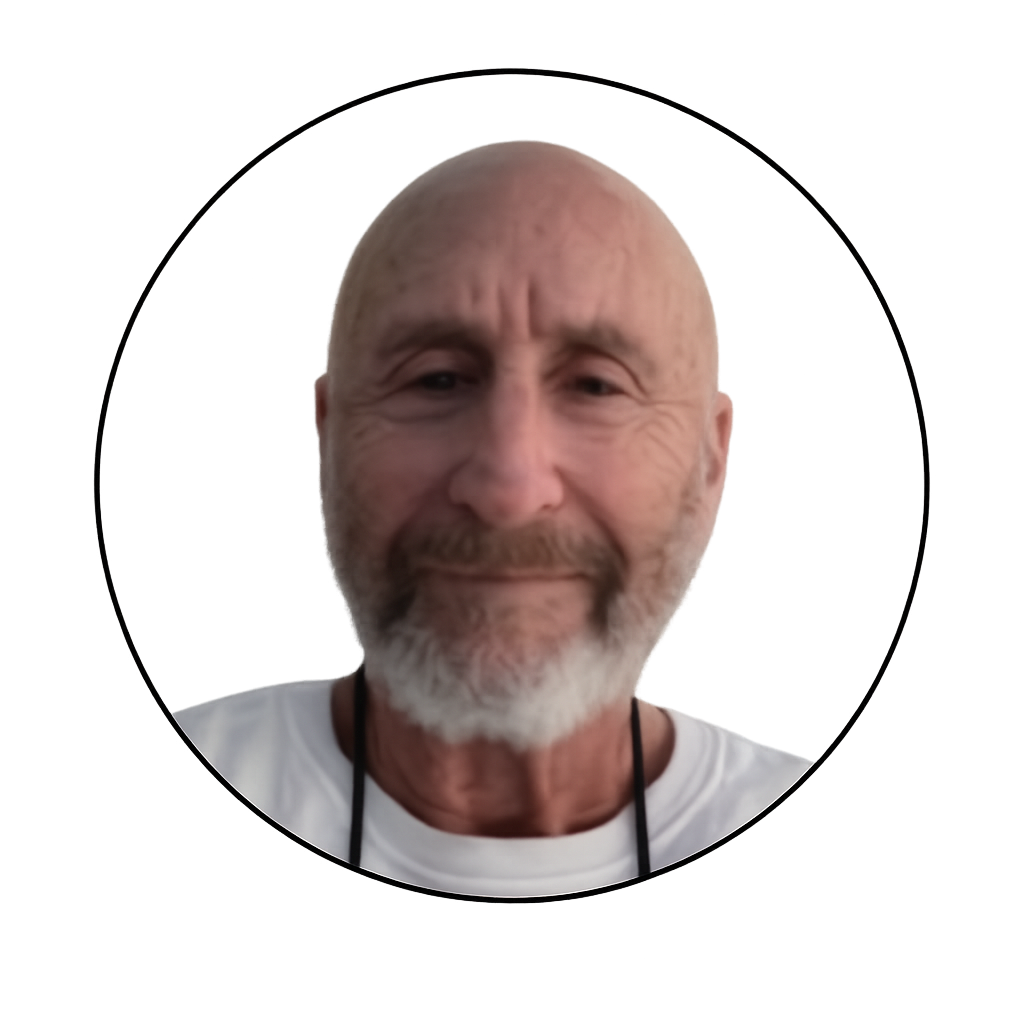
Michael “Burnsie” Burns has been active in men’s circles since 1986 when he graduated from Sterling’s Men, Sex, and Power. He is 78, retired, has been married for 27 years, and is a member of both EBCOM and MDI. He has no children and is committed to supporting men, teams, families, and communities. His focus and attention are centered on his wife, Pat; on personal fitness; and on mentoring, and awareness.
A Note on the Frontispiece:
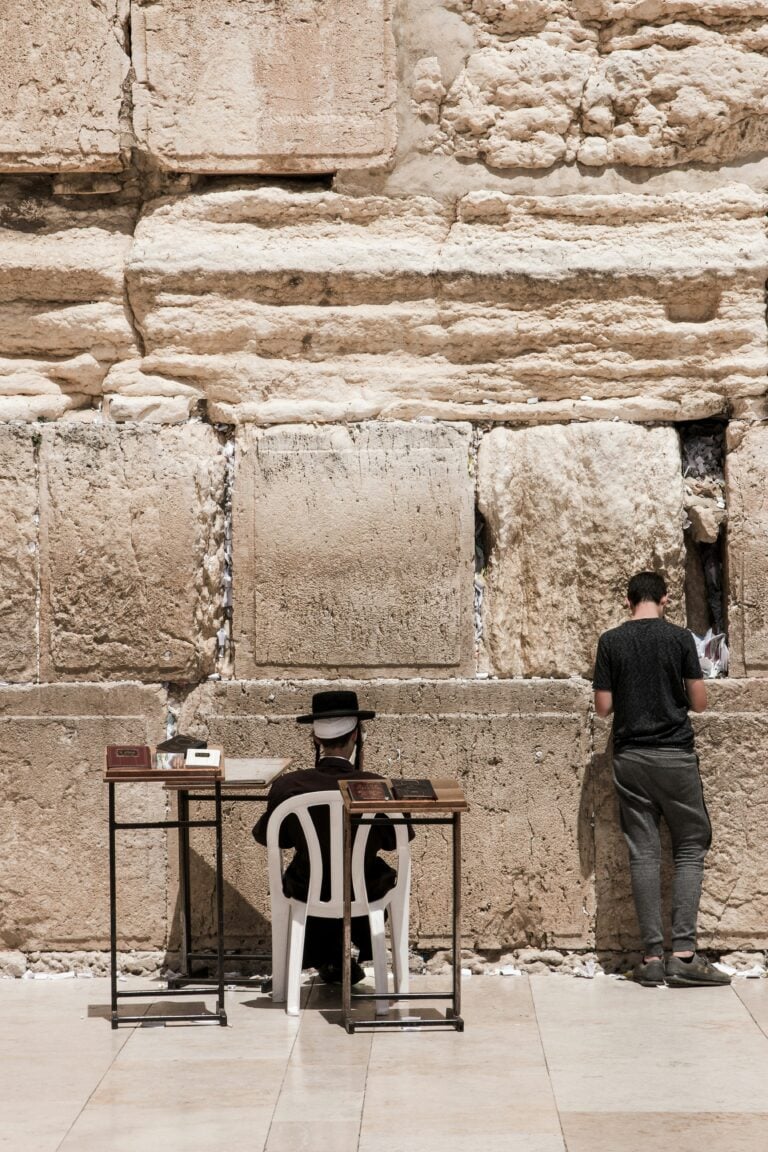
Photo by Sergio Rodriguez – Portugues del Olmo / Unsplash