

Robert Munafo
Guest Writer
Part I: Nỗi Sợ
[Fear-entering the liminal space]
I’d only done this once before, in 1992. It was not, by any means, the most frightening thing I’ve been through although as I recall, it felt that way at the time.
My friend—at the time my ostensible long-term committed partner—gave me a ride on his Honda 475cc motorcycle. We rode on an interstate spur in Massachusetts, perhaps as fast as 60 mph at one point.
I had a helmet, a couple layers of clothing under heavy canvas coveralls, and uneasy confidence in general principles of gravity and inertia, arms around the waist. All of that was far too little to assuage my fears of whatever sudden turn or acceleration would separate me from my friend and his bike. It felt far greater than the various fears—mostly self-imposed—I endured during the run-up to the Sterling Men’s Weekend that he and I would do together a few years later. It was scarier than any of the events and activities I have done with men’s circles before or since.
Late last year, I began to make plans with my current committed partner and husband. He is a man I met in MDI, and with whom I’ve traversed many hero’s journeys: from basic weekly meetings with trusted teammates to weekend intensives full of strangers. The plans weren’t particularly unusual. They were to travel to Vietnam, the first time in that country for either of us, to visit a former teammate who’s been there with his family for eight years.
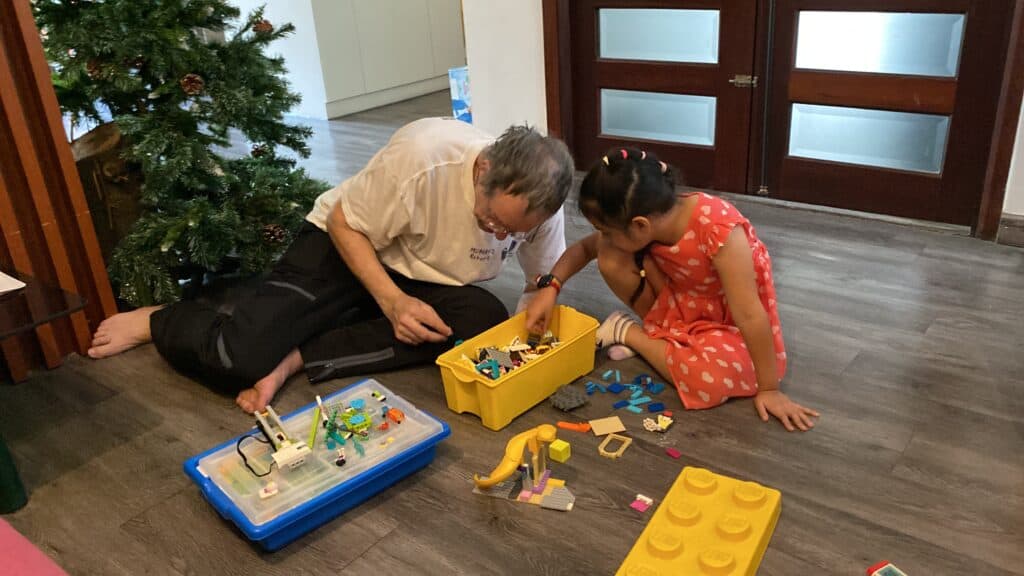
Photo by Dan Kempner
We’ve traveled to many new countries over the past twenty years. If fear were a concern, I would have little more to do than check the US State Department’s travel advisories for any country of interest. They have a world map conveniently color-coded by relative levels of risk or concern for tourists. As it happens, this country was ‘blue’ for ‘least concern,’ better than any we’d previously visited. When we were ready for a February visit to Japan—a frequent destination for us—we accepted our teammate’s invitation and prepended Vietnam to our itinerary.
I am writing this article in the third week of February, the week of the new moon, and therefore of Tết, the Lunar New Year. I was clearly not fearing a rerun of the historical Tết Offensive that had hitherto been my only association with the word, yet I knew something was deeply troubling me.
Part II: Nỗi Tủi Nhục
[Shame – the ordeal]
This time the bike was a lot smaller, as was the driver, and the top speed significantly less. I was given one piece of advice: holding the bike or the driver’s waist is of little actual help. The driver’s shoulders are a lot better for balance and stability. In contrast to a straightforward ride down a few miles of interstate, the thick traffic of a motorcycle-clogged city presents fear modulated by pizzicato opportunities for collisions, most of them head-on and many involving far larger vehicles. On the wider roads there are lanes for cars and lanes for anything-goes, from regular pedestrians, scooters, and motorcycles to cars and trucks, and these are the lanes adjacent to the sidewalks (themselves usually cluttered with parked bikes).
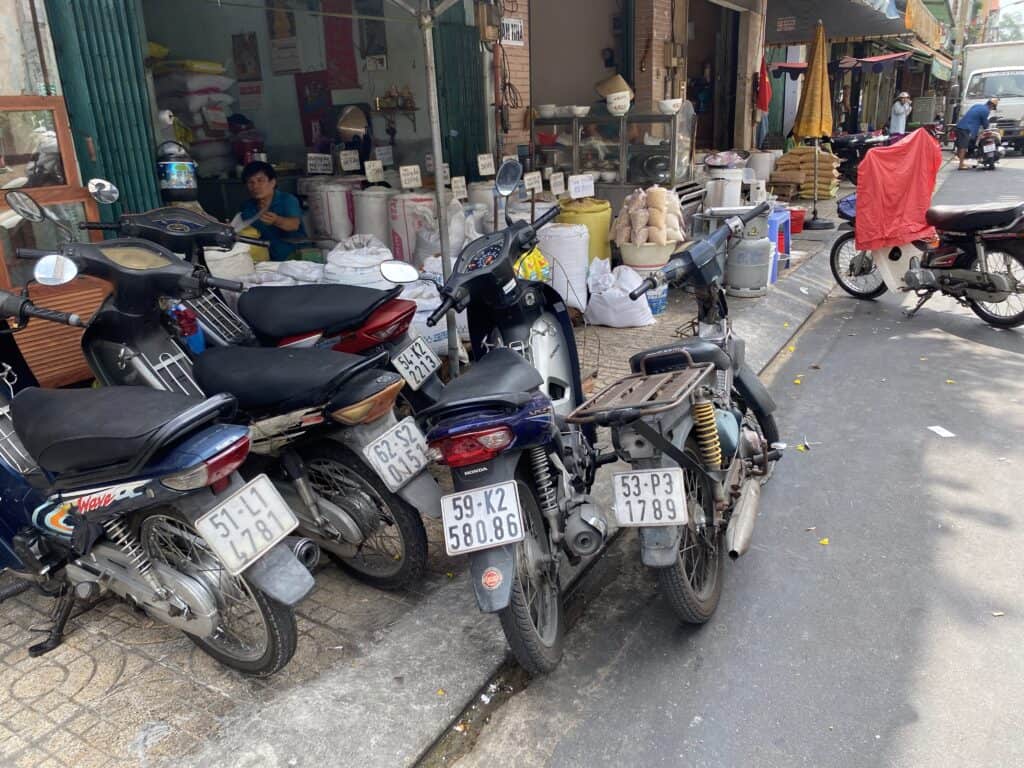
I soon began observing the riders on the other motorbikes, all (except the children) with the mandatory helmet. They used the bike’s foot pegs in the ordinary manner, but often were not holding onto anything with their hands. As a foreigner, I often feel some shame for not being adequately prepared for local customs and etiquette, but in this case my life could be at stake and shame doesn’t fully account for the urgency of emotion I felt — but it was certainly a large part of the experience.
There were many customs to learn and apply that first day: How to enter the host’s home, where first to sit, how to bow (not in the Japanese style), how to shake the matriarch’s hand. On the motorbikes, I learned that subtle pressure sideways or forwards on the shoulders lets a driver anticipate my inertia when effecting turns and accelerating—leaning in. If I could anticipate each driver action—as an active teammate, even turning my head to look whenever a driver would be looking in a mirror—I could replace awkward shame with growing pride.
____
We continued to refine and adjust a complicated February itinerary, handling snags in airline booking that included my later visit to northern California. In one exchange, my irritability rose to the breaking point. Something snapped inside me and I called out, not just to my husband but to no-one in particular. This is bigger than my anxiety about unresponsive third-party travel assistance services, incompetent airline booking agents, or the bureaucratic procedures of a strange communist country.
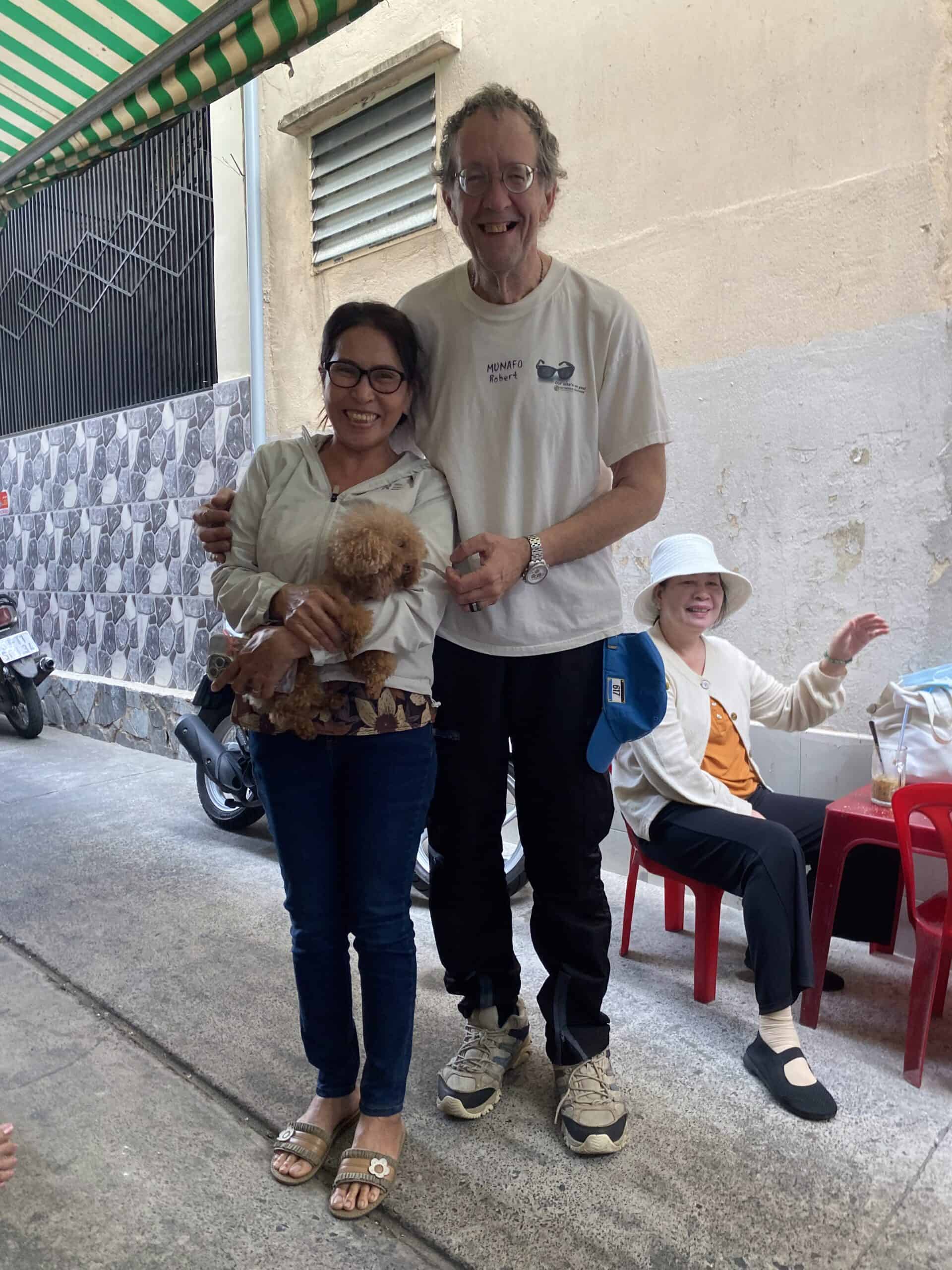
Photo by Dan Kempner
There’s something going on with me that calls to my early years. I asked myself the question that one of my brothers in MDI would ask: “How old were you?” I broke down crying with grief, shame, and remorse. My husband was dumbfounded.
At age five, my mother and I moved in with her parents in Massachusetts. There was a TV in the den where I could watch Sesame Street and short, child-oriented animated news explanations (Lunar Rover, oil embargo, Watergate hearings). Our family had just this one television in an open-plan house with no way to obstruct sound. News of war came every day, as in all homes: Viet Cong, Hamburger Hill, Vietnamization. I heard it but remember none of it now. Yet, though I don’t recall the TV, somehow identifying that source was an opportunity for healing.
I am ashamed of what my country did to Vietnam all those years ago.
Part III: Hòa Bình
[Peace – the homecoming]
People achieve peace by reconciling differences in the world they create, leading from their personal internal state and taking ownership of their perceptions of everything else. Peace can also come in the form of quiet and stillness. By the end of that first evening in the city, an incessant buzz of motorbikes and bustle of people had vanished, earplugs no longer needed… and I saw why my friend had come to love this country, and his neighborhood, in this sprawling city of nine million.
Next day I found I had mastered the art of being one with driver and motorbike, and could lean as needed, automatically. I had taken the time to consider how many people in the city do this every day, with minimal risk of injury. I was left only with the sublime peacefulness of anticipating the driver’s next actions, at banking turns, ducking my head away from awning or tree branch, and enjoying a high-speed ride through the seethingly chaotic and vibrant city. I took in the beauty in the human chaos of the rushing traffic, and the fleeting glances of each person, vehicle, sign, and building as we raced, with near perfect efficiency, through streets wide and narrow.
In this, the Year of the Horse, I recall the need for equestrian athletes to shift their body weight, leaning both to assist the horse and to guide it. As men, we lean in to fight, to embrace, and to share something in confidence. In all instances we defy fear, exemplifying the masculine in the yīn yáng of motion—-the proactive masculine “leaning in” three-quarters of the time (turn left / turn right / hit the gas), a cautious feminine doing so perhaps only a quarter of the time. The proper balance is essential in Vật cổ truyền1 and other wrestling-style martial arts.
The most memorable newspaper headline in my entire life announced the Paris Peace Accords in January 1973. My distorted childhood memories have just the word PEACE in big letters, but that was probably Armistice Day. The 1973 treaty formally ended the United States’ military involvement in the conflicts at the time. Vietnam was unified a little more than two years later, after the more well-remembered Fall of Saigon, and the country evolved into the mostly peaceful place it is now.
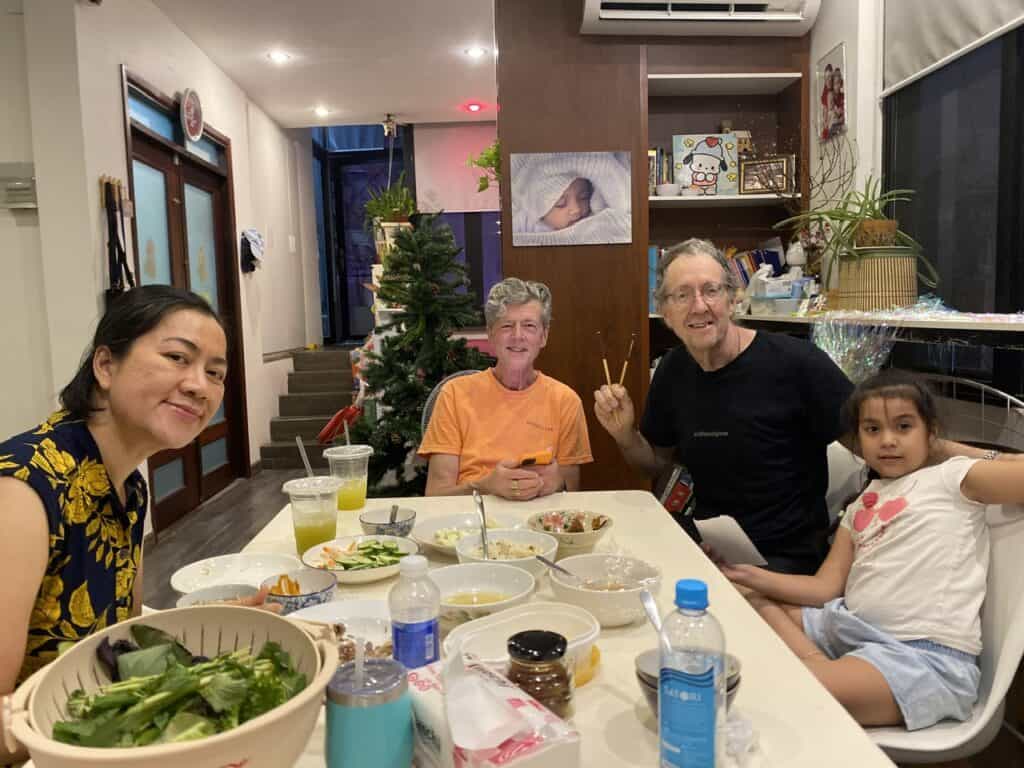
My friend’s wife, Trúc, my husband Rick, the author, and our friend’s daughter,
Annika, at the kitchen table in Hồ Chí Minh city, Vietnam.
Photo By Dan Kempner
Over the weekend, my friend’s kids had their last few bits of schooling, including Chinese language lessons in a separate facility, and a half-day Monday at their main school, before their two-week vacation for Tết. Their school yard was by no means quiet or orderly—quite the reverse!—but I felt peaceful nonetheless. This truly is life, beautiful people living directly and authentically, everything perfect just as it occurs.
As I write, I have returned to my more familiar ‘home’ neighborhoods of Tokyo and Fujinomiya, where I will spend the Lunar New Year, Japanese version. When I return to my own home in America, I will bring with me the truly unexpected rewards of my newly favourite unfamiliar place.
____
Robert Munafo is a polymath and student of the human condition. Based in Rhode Island, he maintains himself with the help of knowledge and techniques described at mrob.com/men